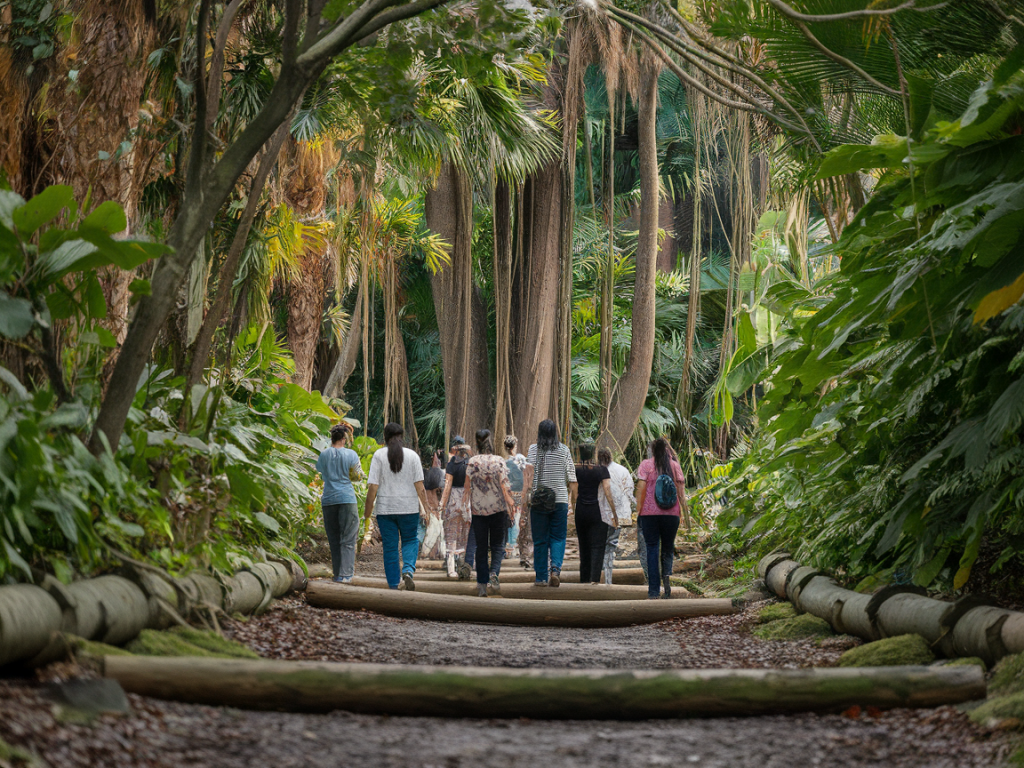
I spend a lot of time wandering footpaths, through hedgerows and over damp woodland floors, and fungi are one of the most rewarding things to notice when you slow down. They’re seasonal, often ephemeral, and beautifully varied in form and colour—but they also need good records to help conservationists track biodiversity and detect changes. Over the years I’ve developed an exact 8-step routine that lets me map fungal finds reliably and submit photo-verified records to my local Wildlife Trusts and national recording schemes. It’s simple to follow on any walk, uses tools most of us already carry, and keeps disturbance to a minimum.
Why record fungi?
Fungi underpin healthy ecosystems: decomposers, mycorrhizal partners, food for invertebrates and indicators of air quality and habitat change. Yet they’re under-recorded compared with plants and birds. By turning a short, repeatable workflow into a habit I can help build datasets that inform conservation, habitat management and even climate-change studies. Photo-verified records are especially useful because they let expert identifiers check details later without me having to be an ID specialist.
What I carry on a fungal walk
Before the steps, here’s my typical kit—light, practical and chosen to make good records:
- Phone with good camera (iPhone 12/13/14 or a mid-range Android like Google Pixel) for quick photos.
- Compact mirrorless camera (Fujifilm X-S10, Sony a6400 or similar) when I want higher quality macro shots.
- Small tripod or pocket gorillapod for steady close-ups.
- Notebook and pencil (or phone notes) for quick context: substrate, smell, habitat.
- Lightweight hand lens (10x) for gill and spore detail.
- Spare gloves and zip-lock bags if I must take a tiny sample for an expert.
- OS Maps or Mapy.cz app for accurate mapping and offline use; iRecord and iNaturalist apps for submitting records.
The exact 8-step routine
Use these steps in order on every fungal encounter. They keep your data consistent and make it easy for experts to verify finds.
- Stop, note the context — Before taking any photos, look around. Is the fungus on soil, on a downed log, on leaf litter, or on living wood? Jot down the tree species nearby (oak, beech, pine) and whether the ground is acidic or calcareous if you know. This ecological context is often what separates similar species.
- Map the exact spot — Open your mapping app and drop a pinned waypoint. I use OS Maps for precise grid references or Mapy.cz for offline positioning. On my phone I switch GPS to high accuracy, tap to place a pin and copy the grid reference. If the app supports sharing coordinates, export them to a new entry in iRecord or iNaturalist. Even a rough 10–20m accuracy is far better than no location at all.
- Take a habitat-wide photo — Before any close-ups, photograph the wider scene: a shot showing the fungus in relation to the path, surrounding trees and substrate. This gives invaluable habitat context for identifiers and future visits.
- Photograph multiple diagnostic angles — Aim for at least five images: top (cap), underside (gills/pores), side (stem and attachment), habit shot (cluster arrangement), and a close-up of surface texture. Use a tripod or rest your elbows to avoid blur. Include a scale object—a coin or a small ruler—or use a small twig as scale if you don’t carry props.
- Record quick ID clues — Use a short voice note or typed note on your phone to capture smell (e.g. mealy, almond, farinaceous), bruising colour when touched, and whether the flesh changes colour when cut. These ephemeral traits are often decisive in ID but disappear quickly.
- Minimise disturbance — Don’t uproot or strip fungi unless you have permission and it’s absolutely necessary for a confident ID. If a tiny piece is needed, take only a sliver and replace it. Many Wildlife Trusts and local recorders prefer photo verification, and removing specimens harms the habitat and reduces others’ chance to see it.
- Upload with full metadata — Back at home or when connectivity allows, submit your record to iRecord or iNaturalist and tag your local Wildlife Trust (e.g., via iRecord’s local gateway). Include: exact coordinates or grid reference, habitat notes, substrate, number of fruiting bodies, date/time, and how confident you are about the ID. Attach all photos and any audio notes. For iRecord, choose the appropriate project (e.g., “Fungus Recording Network” or your county fungal group).
- Follow up and learn — Watch for confirmations or queries from the verification community. Many records are checked by county mycologists who may ask for extra photos or spore print details. If they request more info and you can safely provide it, update your record. Over time you’ll learn which features matter for particular genera.
How I make photos that help IDs
Good images make the difference between “Fungi sp.” and a confident species-level ID. I aim for sharpness, colour accuracy and context.
- Use diffused light—overcast days are perfect. Direct sun blows colours out and creates harsh shadows.
- Macro lenses or the phone’s close-up mode help, but keep a shallow depth-of-field manageable—show enough of the gill/edge in focus.
- White-balance matters—set it manually if your camera allows, or photograph a neutral object nearby to correct later.
- Include multiple scales and wide shots so size is apparent.
Submitting to your Wildlife Trust: practical steps
Most county Wildlife Trusts accept records via iRecord or via their local recording portals. My routine is:
- Use iRecord (www.brc.ac.uk/irecord) or iNaturalist for initial uploads. Both let you add coordinates, photos and notes.
- On iRecord, choose your county and the “Fungi” taxon. Many records feed to local datasets used by Wildlife Trusts.
- For sensitive species or protected sites, mark the record as sensitive if the platform allows; many authorities hide precise locations from public view but retain them for conservation use.
- If you know your local fungal recorder or WT contact, send them a link to the record or an email with attached photos and metadata. Personal contact speeds up verification for rarer finds.
Notes on ethics and legality
Respect landowners and access rules. On private land ask permission before collecting samples. In protected areas (SSSIs, NNRs), check rules—some sites restrict specimen removal entirely. Don’t over-harvest: many fungi are sporocarps that release spores and play an active role in the ecosystem.
My quick field checklist
| Must-have | Phone, photos, map pin, OS grid, habitat notes |
| Useful | Hand lens, tripod, scale, notebook |
| Rarely needed | Small sample (only with permission), spore print materials |
By following these eight steps I’ve turned casual sightings into useful conservation records without turning every walk into a scientific mission. It takes a little practice to make photos that show the right features and a little patience to learn how record submission works, but the payoff is real: better data for local trusts, more certainty when learning IDs, and a deeper connection to the paths I walk. If you want, I can share my photo presets and a printable checklist you can tuck in a pocket—just say the word and I’ll post them on Outdoorangus Co.