I spend a lot of time crossing open moorland in the UK, and two of the deer species I bump into most often are red deer and fallow deer. At a glance they can seem similar — both are large, tawny, grass-eating mammals that favour open country at times — but once you know what to look for you can tell them apart quickly and confidently. Below I share the practical cues I use on the hill: visual features, behaviour, seasonal differences, and the little signs in the landscape that help identify red vs fallow deer.
Why identifying them matters
Knowing which species you’ve seen isn’t just a matter of curiosity. It matters for understanding local ecology (fallow deer are often non-native and can have different impacts on vegetation), for reporting wildlife sightings accurately, and for your own enjoyment — watching behaviour such as rutting or territorial displays becomes far more engaging when you know which species you’re watching. It also helps to follow the right safety and disturbance guidance — especially during the rut and when females have young.
Overall size and proportions
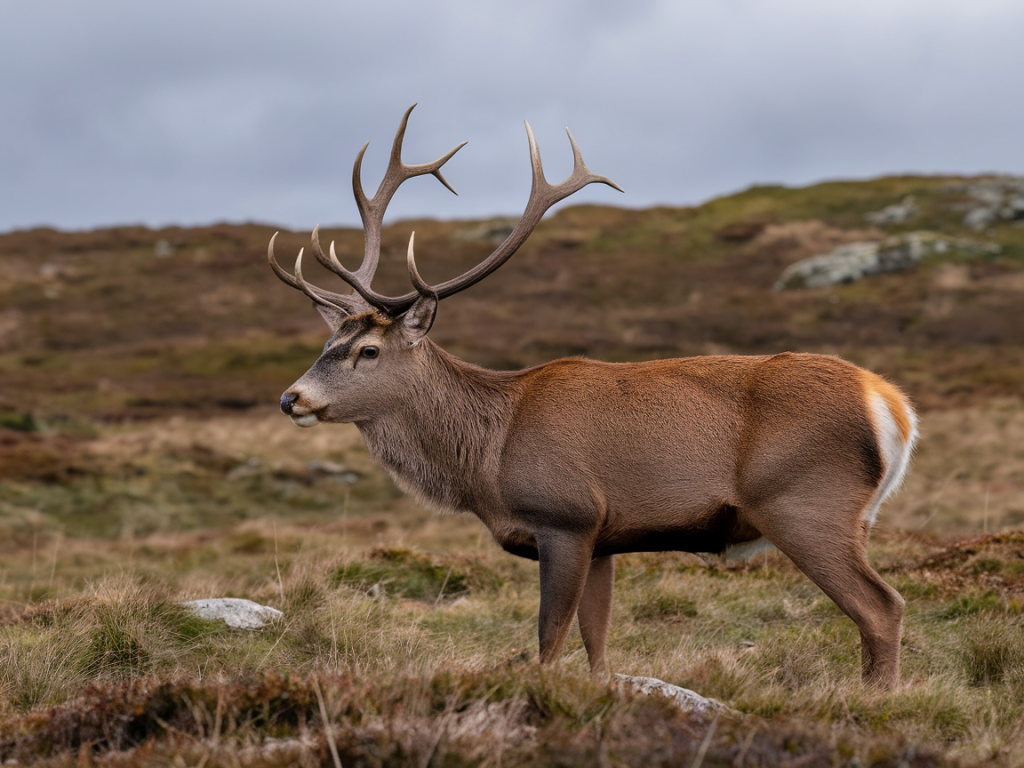
One of the first things I look at is general size and body shape. Red deer (Cervus elaphus) are the largest deer species in the UK. Adult stags are bulky, with a deep chest and long legs; hinds are also large compared to most fallow deer. Fallow deer (Dama dama) are medium-sized, often described as delicately built — they have proportionally shorter legs and a more compact body.
- Red deer: larger, heavier, longer-legged.
- Fallow deer: smaller, sleeker, more compact.
Antlers: shape and timing
Antlers are one of the most reliable diagnostic features — when animals have them. I always look at antler shape, which differs dramatically between species.
- Red deer stags: have branched antlers with multiple tines growing upward from a main beam — a classic “tree-like” structure. As stags age, their antlers generally grow more points and become heavier.
- Fallow deer bucks: have palmate antlers — that is, a broad, flattened, shovel-like section (palmation) with short tines around the edge. They often look like a fan or a rake.
Timing: both species shed antlers annually — red deer typically shed in late winter/early spring; fallow deer can vary but often shed slightly later. During late autumn and winter you’ll see the full antlers on many males, which makes ID easier.
Coat colour and markings
Coat patterning is very useful, especially on fallow deer. I scan for spots, mantles and rump patches.
- Red deer: coat colour ranges seasonally — reddish-bronze in summer, greyer-brown in winter. They lack strong spots in adulthood (except faint summer speckling sometimes visible on young animals). A red deer’s rump is relatively plain, often showing a pale area surrounded by darker fur.
- Fallow deer: are famous for their variability — common colour morphs include the menil or spotted summer coat (rich brown with white spots), the darker black fallow, and the paler pale morph. Most adult fallow deer in summer show clear white spots and a distinctive dark dorsal stripe with a white rump patch bordered by a dark horseshoe shape — that white rump is a great giveaway.
Rump and tail features
If you can see the hindquarters, this often seals the ID.
- Fallow deer: have a prominent white rump with a dark border and a long, black-tipped tail. The rump patch is usually very obvious at a distance and especially visible when they’re alert or moving away.
- Red deer: show a less distinct rump — often a pale patch but without the clear white horseshoe shape of fallow deer. Their tails are shorter and less contrasting.
Head and face shape
Head proportions and facial markings help when animals are relatively stationary.
- Red deer: have a longer, narrower face with large, rounded ears. The muzzle tends to be darker and less marked.
- Fallow deer: display a slightly shorter, broader face and often have paler cheek patches depending on the colour morph.
Behaviour and group structure
Watching how animals behave and group up is incredibly informative. I try to observe from a distance with binoculars (I use a lightweight pair, like the Zeiss Terra ED or Nikon Monarch, when I’m out on moorland) and note these cues:
- Red deer: often form larger, looser groups in winter and may be more solitary or in harems during the rut in autumn. Stags can be territorial during the rut and vocal — roaring is common in October in many parts of the UK.
- Fallow deer: tend to form smaller, more stable herds, sometimes segregated by sex outside the rut. Bucks use displays and fights during their rut in autumn but their vocalisations are different — a high-pitched “whoop” or barking sound rather than the deep roar of red deer.
Tracks and droppings
If you don’t see the animal but find signs, these are helpful:
- Tracks: red deer hooves are larger (about 9–11 cm long) whereas fallow deer tracks are smaller and narrower.
- Droppings: both make pellets, but red deer pellets are generally larger. The distribution can reflect feeding style — red deer often graze in open patches and leave scattered dung, while fallow deer droppings can be more concentrated where they bed down.
Calls and rut behaviour
If you’re fortunate enough to be out during the rut, the sounds tell you straight away. I always carry earplugs when camping near rutting stags — they can be spectacularly loud!
- Red deer stags: produce a deep, sustained roar used to attract hinds and intimidate rivals. The sound carries across moorland and is unmistakable if you’ve heard it before.
- Fallow deer bucks: make a barking or wheezy call — a higher-pitched series of barks than the red deer roar.
When in doubt — use a quick comparison table
| Feature | Red deer | Fallow deer |
|---|---|---|
| Size | Large | Medium, more compact |
| Antlers | Branched, upward tines | Palmate (flattened “shovel”) |
| Coat | Reddish summer, greyer winter; no adult spots | Variable; often spotted in summer with distinctive white rump |
| Rump | Plain, pale | White patch with dark horseshoe border |
| Call | Deep roar | High-pitched bark/whoop |
Practical tips for field ID and photography
From a practical standpoint, these are the habits I use to both identify and photograph deer responsibly on moorland:
- Always keep your distance — use binoculars or a telephoto lens (a 300mm or 400mm on a crop-sensor body is a good starting point; for lighter walking kits I often use a 70–300mm zoom) so you don’t stress the animals.
- Look for the rump patch and antler shape first — these are visible at longer ranges than detailed face markings.
- Note behaviour: are the animals in a harem, feeding, or showing rutting behaviour? This helps with species ID and with choosing the right approach for photography.
- Respect seasonal sensitivities: avoid close approaches to females with calves and steer clear of rutting stags — disturbance can cause serious stress or dangerous reactions.
- Record what you saw using a simple note: location (GPS or grid reference), number of animals, sex/age classes, antler presence, and behaviour. These notes are great for later species confirmation and useful for citizen science records.
Local context and conservation notes
At Outdoorangus Co (https://www.outdoorangus.co.uk) I try to pair fieldcraft with conservation-minded practice. In some parts of the UK fallow deer have been introduced and can influence woodland regeneration and ground flora; red deer numbers are also managed carefully in many regions. If you’re recording sightings for local groups or reporting to services like iRecord, be as accurate as possible about the species and the context (e.g. enclosed parkland vs open moorland). That data helps land managers and conservationists make informed decisions.
Next time you’re out on the moor, take a moment to observe shape, antlers, rump and behaviour — you’ll be surprised how quickly these cues become second nature. And if you want camera or binocular recommendations for hill walking and wildlife watching, I’m happy to share the gear I carry on a typical upland day.