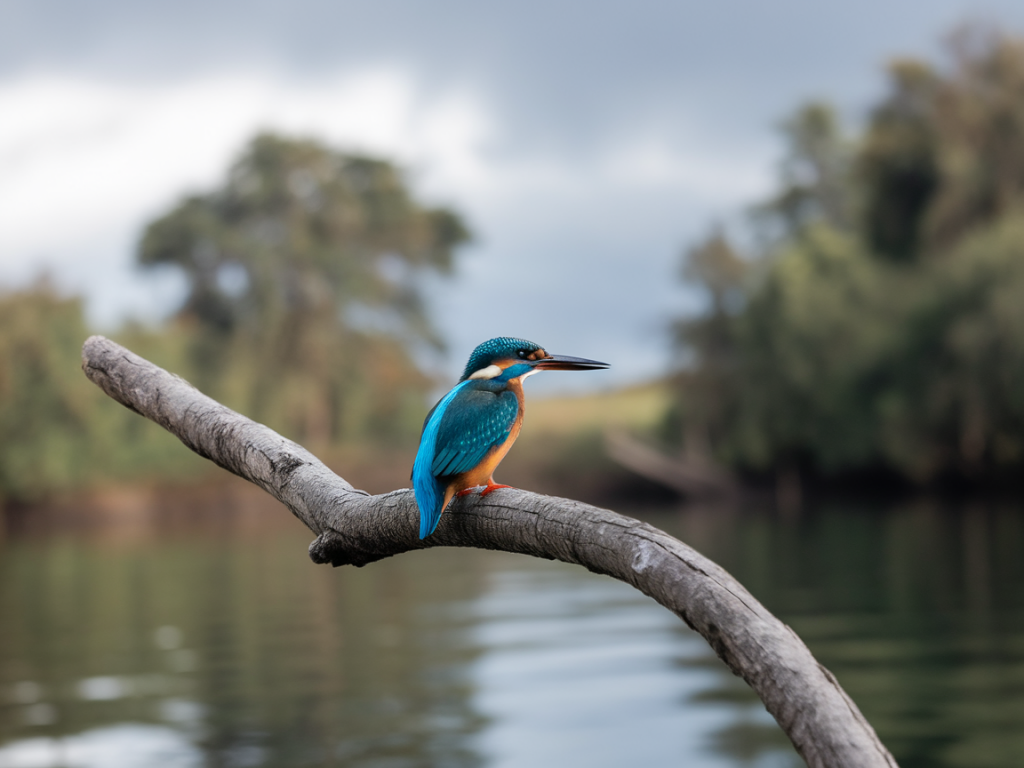
There’s a special hush to lowland rivers at dawn — mist lifting off the water, the first insects waking, and the flash of a kingfisher slicing through the pale light. If you want to photograph these jewel-bright birds without lugging a full hide and spooking them, planning and a lightweight-hide alternative can make the difference between a good shot and an empty morning. I’ve learned this through many early starts along chalk streams and slow lowland rivers, so here’s a practical, boots-on-the-ground guide that covers scouting, kit, timing, concealment techniques, camera settings, and ethical considerations.
Why a lightweight-hide alternative?
Traditional canvas hides work well, but they’re heavy to carry, slow to set up and can be conspicuous on small rivers. A lightweight solution lets you remain mobile, blend into the bankside environment, and adapt quickly to where kingfishers are hunting. For me, the best approach combines a low-profile sit-and-wait setup with natural cover or a compact pop-up screen — easy to carry in a daypack and quick to deploy before dawn.
Scouting and choosing your stretch
Good photos start with good location work. I spend daylight hours or evenings scouting river sections to note perch sites, obvious feeding zones, and where the bank offers cover. Look for:
I also mark GPS points on my phone and take a couple of reference photos so I can find the exact spot in pre-dawn gloom. Kingfishers often favour the same perches, so repeat visits are rewarded.
When to arrive
Dawn is the prime time: kingfishers are most active in low light when fish are nearer the surface. Aim to be in position 30–45 minutes before sunrise. That gives you time to set up quietly, check camera settings, and watch for the first movements. Early arrival also reduces disturbance to other river users.
Light, composition and shooting direction
I prefer shooting with the sun behind me or slightly to the side to backlight the water and give nice separation between bird and background. Backlighting can also enhance splashes. If you’re facing the sun, use higher shutter speeds and watch for blown highlights on water.
Composition-wise, low angles work best. A lower viewpoint flattens the scene, keeps the background simpler, and gives you more dramatic wing action shots. Position yourself so the bird will be against a relatively uniform background — distant reeds, shaded trees or smooth water.
Lightweight-hide alternatives I use
Here are practical options I’ve tested and recommend, depending on riverbank conditions and how stealthy you need to be.
Practical setup tips
Camera gear and settings I recommend
I usually shoot with a 500mm or 600mm lens on a sturdy monopod for balance and mobility. Here are go-to settings that I start with at dawn, then adjust as light improves:
| Mode | Manual or Aperture Priority |
| Aperture | f/5.6 – f/8 (depending on lens and desired depth of field) |
| Shutter speed | 1/1000s or faster for flight; 1/500s can work for perched birds |
| ISO | Start 400–1600 at dawn; push higher if needed to maintain shutter speed |
| Focus mode | Continuous AF (AF-C) with a small cluster/zone |
| Drive mode | High-speed continuous for flight sequences |
| Exposure compensation | +1/3 to +1 stop for dark backgrounds or backlit water reflections |
In low light many of us are tempted to stop down to increase sharpness, but with fast-moving kingfishers the priority is shutter speed. If your lens has image stabilisation, use it when perched but switch to a stiffer stabilisation setting or off when panning for flight.
Ethics and avoiding disturbance
Kingfishers are territorial and sensitive to disturbance, especially during breeding season. I follow these principles every time:
What to expect and how to react
Kingfishers are fast and erratic. Perched shots are more frequent than flight at first light. When one dives, be ready for sequences of splash and lift — these are often the most dramatic images. If you get a few perched frames and a single clean dive sequence, that’s a very successful morning.
Final practical checklist
With patience, careful scouting and a low-impact concealment method, dawn kingfisher sessions on lowland rivers can be hugely rewarding. You’ll capture more natural behaviour and avoid the heavy gear that often keeps photographers at home. On Outdoorangus Co I share route notes and specific stretches where I’ve had consistent success — drop by the site for seasonal updates and location ideas if you want to plan a trip based on recent sightings.