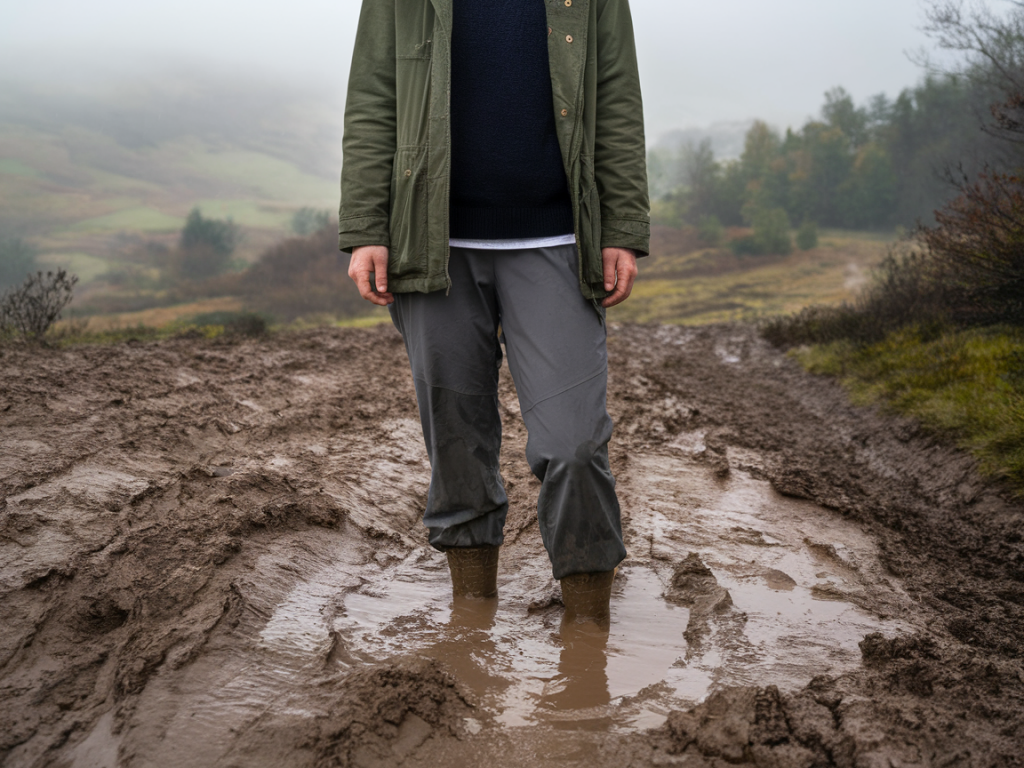
I spent a cold, soggy week on Dartmoor this winter testing five waterproof boots across peat hags, plunging bogs and long, muddy tracks. If you spend much time walking UK winter trails you already know the challenge: deep, suctioning mud, constant drizzle, and the kind of wet that seems to find a way through seams, collars or flimsy leather. I wanted boots that actually keep feet dry, give confidence on greasy tussocks and drainage ditches, and survive the punishment of repeated bog crossings without falling apart.
How I tested
I approached this like I do most kit reviews — repeated real-world use rather than a lab. Each pair got four full days on the moor, carrying a 14–16 kg pack, and I alternated pairs across similar routes so weather and terrain were comparable. I waded through open bog pools, climbed peat hags, descended muddy granite slopes and crossed wet heather. Between walks I inspected seams, soles and waterproof linings, and recorded fit, comfort, warmth and traction.
For reference the five boots were: Salomon Quest 4 GTX, Lowa Renegade GTX Mid, Scarpa Zodiac Plus GTX, Meindl Burma Pro GTX, and Berghaus Supalite GTX (a lightweight 'tough' option). I included a mix of heavy-duty leather and modern synthetic designs since both have their advocates for UK winter use.
What matters most on a Dartmoor winter walk
Before the details, here are the things that decided my favourites out on the peat and bog:
Field notes on each boot
Salomon Quest 4 GTX
These are the most supportive, modern hiking boot in the test. The Quest 4 GTX felt rigid under load in a good way — you notice it on descents and when moving over uneven granite. Grip was excellent on wet rock and compressed peat thanks to the Contagrip sole. Waterproofing held up: I submerged the toe box repeatedly and the Gore-Tex membrane stayed dry for the day. Break-in time was minimal for me, though the narrow last may feel tight for wide feet. They’re heavier than the lightweight options but the protection and ankle support make them ideal for long, rough winter days.
Lowa Renegade GTX Mid
The Renegade is a UK favourite for a reason. It strikes a balance between comfort and robustness. The leather upper resisted abrasion and the sole offered reliable grip on muddy tracks. Waterproofing was solid in prolonged drizzle and shallow bog crossings, though in deep left-foot-submerged moments water pooled over the collar and seeped in at the tongue on one test — not a membrane failure but a design compromise typical of mid-height boots. The fit is generous and comfortable on long miles.
Scarpa Zodiac Plus GTX
Scarpa’s construction felt bomber — the leather upper and robust stitch lines took a beating and came back for more. The Zodiac Plus has a grippy Vibram sole that excelled on wet granite slabs and hard peat edges. It’s slightly stiffer than the Renegade and relies more on ankle support than cushioning, which some walkers love for stability and others find firm on longer road stretches. Waterproofing was exemplary: despite full peat immersions, my feet stayed dry.
Meindl Burma Pro GTX
Meindl’s mid-weight leather boot impressed me with comfort and warmth. The footbed and midsole are cushioned in a way that reduces fatigue during a long, cold day. Traction was good but not class-leading on polished rock; on muddy turf and heather it held very well. I observed no waterproof failures and the leather resisted scuffs from hidden rocks and gorse better than the lighter synthetics.
Berghaus Supalite GTX
This was the lightweight contender. The Supalite is comfortable and agile, great for fast winter day-walking. On Dartmoor’s bogs it sometimes felt too light — the sole didn’t bite as confidently on greasy rock, and a couple of deeper bog crossings left my socks damp at the cuff. Its breathability is excellent, which is handy during steep climbs, but if your routes include long peat bogs or lots of standing water, a heavier, more sealed boot will do a better job at keeping you dry.
Quick comparison
| Model | Approx weight (pair) | Waterproofing | Traction | Warmth | Typical price |
|---|---|---|---|---|---|
| Salomon Quest 4 GTX | 1.8–2.0 kg | Excellent | Excellent (Contagrip) | Good | High |
| Lowa Renegade GTX Mid | 1.6–1.8 kg | Very good | Very good | Good | Mid–high |
| Scarpa Zodiac Plus GTX | 1.7–1.9 kg | Excellent | Excellent (Vibram) | Good | High |
| Meindl Burma Pro GTX | 1.6–1.8 kg | Very good | Good | Very warm | High |
| Berghaus Supalite GTX | 1.2–1.4 kg | Good | Fair–Good | Fair | Mid |
Fit, sizing and socks
Fit matters more than brand. I advise trying boots with the socks you’ll actually wear on the moor — thick wool or merino blends for winter. I found the Salomon runs narrow, Scarpa and Meindl are roomier in the forefoot, and Lowa is a good middle ground. Leave a thumbnail’s width at the toes for downhill. Insoles make a difference: an aftermarket supportive insole can transform a boot that otherwise feels a little flat under load.
Care and maintenance on wet UK trails
Leather needs attention. After each multi-day wet outing I removed laces, cleaned peat and grit, stuffed the boots with newspaper to wick moisture, and treated the leather with a suitable wax or oil when dry. For Gore-Tex-lined boots avoid heavy oils that can clog the membrane — instead use dedicated waterproofing treatments designed for membrane boots. Re-sole options exist for some of these brands (notably Scarpa and Meindl) which is worth considering if you plan to buy boots as a long-term investment.
Which boot I reached for most on Dartmoor
If I had to pick one for Dartmoor’s winter mix it would be the Scarpa Zodiac Plus GTX for technical outings where wet rock and peat are frequent. Its sole and build gave me confidence when the ground was at its worst, and the waterproofing was faultless in my tests. For long, mixed winter hikes where comfort and a forgiving ride are priorities, the Lowa Renegade is my go-to. The Salomon Quest is top if you carry heavy loads and want modern support, while the Meindl offers warmth and durability. The Berghaus is great for faster, drier winter days or lighter walkers who favour agility.
Practical buying tips
If you want more detail on any of the specific boots — tread patterns, exact last width, or where I found scuffs and wear after the Dartmoor test week — tell me which model and I’ll post photos and closer up notes from the field. I’m always testing kit on real walks so I can recommend what actually works where it matters: on the trail under wet, muddy UK skies.