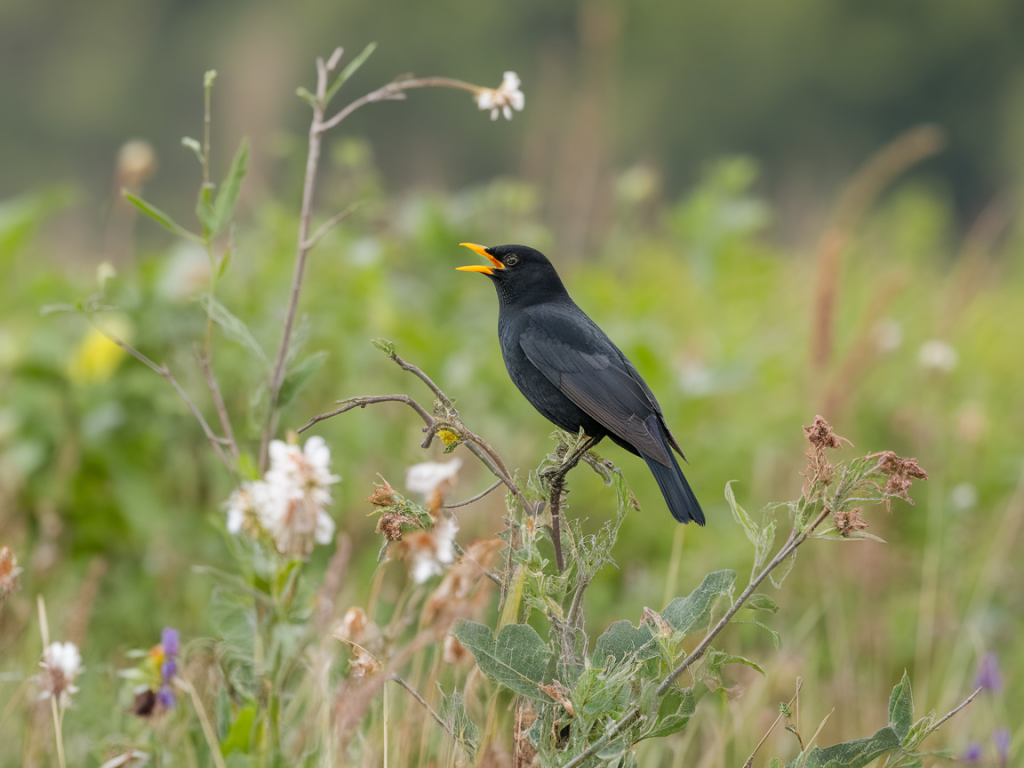
Walking across farmland in spring and autumn, I’ve come to depend on more than my eyes to tell the story of the landscape. The soundscape — the calls and songs of birds — is a constant, changing record of what’s happening beneath hedgerows, on stubble fields and along wind-swept lanes. Over thousands of hours in the field, I’ve started to recognise patterns: which calls announce territory, which betray a lingering migrant, and which hint at a breeding success (or failure). In this post I want to share what common farmland bird calls reveal about breeding and migration, drawing on practical experience, simple ID tips and a few things I’ve learned about listening with intention.
Why pay attention to calls?
Birdsong and calls are information-rich. A single skylark’s song floating over a field tells you a male is advertising territory and fitness. A sharp alarm chatter from a flock of starlings can warn of a raptor overhead. Understanding calls helps answer questions like: are birds still on passage? Is the species breeding locally? Are young present? It also makes walks more rewarding — you notice behaviours you’d otherwise miss.
Song versus call: a quick primer
I like to separate song from call because they serve different purposes. Songs are typically longer, more musical and used primarily in the breeding season by males to attract females and defend territory. Calls are shorter, functional sounds used year-round — alarm calls, contact notes, begging from chicks, or food-related signals.
What specific calls reveal
Below I outline several common farmland species and what their seasonal vocalisations usually indicate. These are general patterns — behaviour can vary by region, weather and population trends — but they’re useful rules of thumb when you’re out walking.
| Species | Seasonal call/song | What it reveals |
|---|---|---|
| Skylark | Long, rising song flight in spring/summer | Male territory display and mate attraction; persistent song implies nearby nesting territory |
| Yellowhammer | ‘A little bit of bread and no cheese’ phrase, contact calls | Song indicates resident breeding male; contact calls in winter show flocking behaviour |
| Skylark | — | — |
| Lapwing | Fast peewit calls and alarm whistles | Displays breeding aggression; alarm calls can indicate nest or chick presence |
| Starling | Chattering, mimicry, noisy flight calls | Chatter in summer often ties to nesting colonies; winter murmuration calls show flock cohesion |
| Skylark | Repeated | Repeated |
Sorry for the cheeky repetition in that table — call me the human editor with a fondness for skylarks. The point is that specific calls are seasonal cues: sustained songs through spring and early summer usually equate to breeding, while abrupt flight calls in autumn often signal migration or flock movement.
Examples from my walks
Last May I spent an hour in a small field margin listening to two territorial yellowhammers trading song phrases from opposite hedgerows. The pattern was classic: dawn-song intensity, frequent breaks to chase off intruders, and, crucially, a change later in the season when the songs became quieter and gave way to soft contact notes — a sign that pairs had settled and were busy with nests and chicks.
On another occasion, in late August, I crossed a harvested arable with hundreds of linnets and goldfinches on the stubble. Their bright, twittering calls and persistent flock contact notes told me these were post-breeding flocks forming for the move south. Watching their behaviour alongside the calls (tight, directional flights) confirmed they were preparing for migration rather than simply moving between feeding patches.
Begging calls: the clearest sign of breeding success
One of the most satisfying sounds to hear in summer is the high-pitched, repetitive begging of chicks. Skylark chicks remain well-hidden; hearing their faint peeps while a male continues to sing above is a strong indicator of successful nesting. Likewise, the frantic begging of a young starling at the nest entrance, mixed with parents’ food-begging calls, tells you fledging is imminent.
Alarm calls: clues to nest location and predator pressure
Alarm calls are invaluable for finding birds you can’t see. Lapwings, for example, give a harsh, loud alarm when foxes or raptors approach. Repeated alarm calling around a patch of ground often means nests or chicks are nearby. From a conservation perspective, persistent alarm calls across a site may point to high predator pressure — something local groups sometimes monitor when planning predator-control or habitat management.
Passage calls in migration
During migration I listen for short, repeated flight notes. Skylarks, pipits and wagtails give abrupt contact calls while crossing farmland — these calls are less musical than breeding song but more insistent. In spring, you might also hear more diverse repertoires as birds from different areas mix and males test variations to establish territory quickly.
Practical tips to get better at interpreting calls
When calls mislead
A caution: calling behaviour isn’t a perfect indicator. Some species sing outside of breeding (skylarks winter-singing in mild years), and juveniles can mimic adult calls. Weather also matters — strong wind reduces singing, and prolonged cold snaps can delay breeding song. Always combine vocal clues with visual signs: nests, carrying food, fledglings or mating displays.
Using calls for conservation and citizen science
I’ve taken part in local surveys where volunteers used call counts to estimate breeding densities. When done carefully, vocal surveys are powerful: they allow detection of secretive species without disturbing nests. If you’re interested in contributing, join a local BTO or county recorder group — learning standard survey methods (point counts, transects) makes your observations much more useful.
Listening is a simple, low-impact way to connect with farmland wildlife. Over time, the calls will start to form a narrative: who’s claiming territory, who’s on the move, who’s successfully raising young. And as I walk and listen, I find the landscape tells me its seasonal story — if you tune in, it will tell you one too.