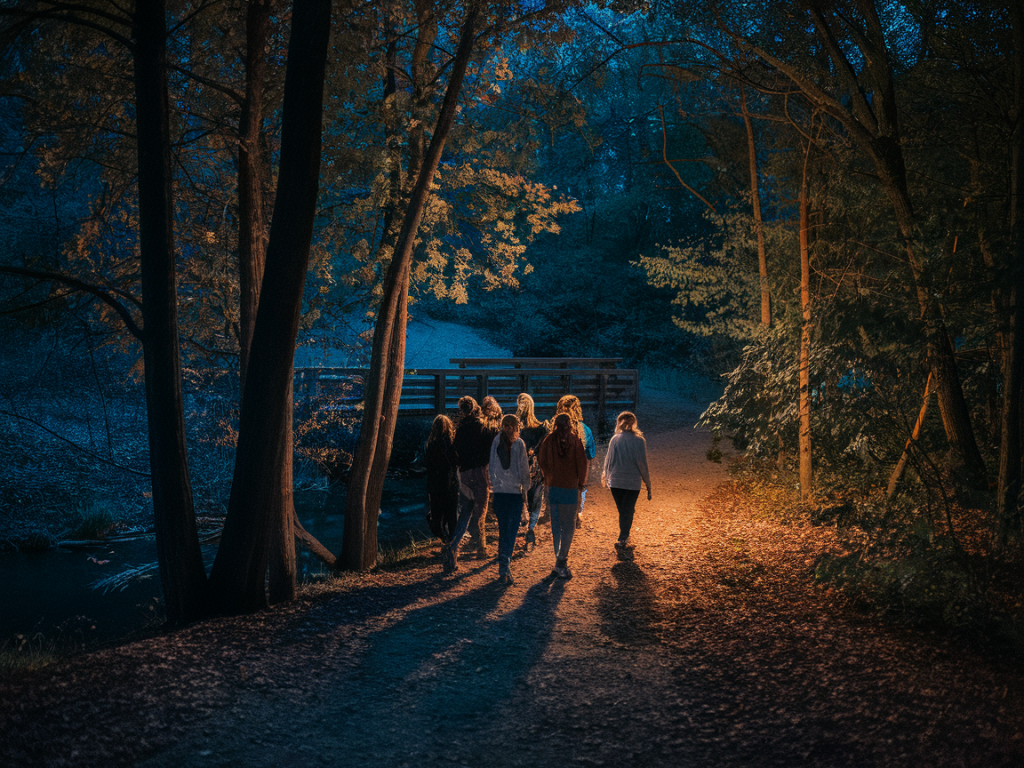
I lead a lot of groups on daytime walks, but guiding a youth group on a beginner-friendly night walk is one of my favourite ways to introduce young people to the nocturnal side of the countryside. Night walks can be quietly magical — from the hush of hedgerows to unexpected calls of owls — but they also demand extra care to protect both participants and wildlife. Over the years I’ve learned what works: how to keep things simple, safe and respectful of the animals we share the landscape with. Below I share a practical, boots-on-the-ground guide drawn from those walks.
Why do a night walk with young people?
Night walks give young people a fresh perspective on familiar places. Movement and sound take on different roles; bats and owls are more active; moths swarm artificial lights; foxes and badgers are easier to glimpse if we move quietly. For many kids, a night walk is a confidence-building, sensory-rich experience that encourages curiosity and care for wildlife. But the same qualities that make it special—silence, low visibility—mean we must plan to avoid disturbing animals.
Planning and permissions
Start with location and permissions. Choose a place you know well or can scout during the day: a footpath through mixed scrub, a coastal prom with lamps that can be avoided, or a small reserve that allows after-dark visits. Check with landowners and local councils where necessary, and make sure you understand any bylaws about fires, torches or group size.
For youth groups, parental consent forms and emergency contact details are non-negotiable. Share a simple itinerary and arrival/collection times. Tell guardians what clothes and footwear you recommend and whether participants may need a torch or headlamp (and what sort of torch: see “lighting” below).
Group size, ratio and behaviour
I aim to keep groups small — usually 8–12 young people per leader. Smaller groups reduce noise and make it easier to keep track of everyone in low light. If you must run larger groups, split them into sub-groups with a leader for each. Set clear ground rules at the start: stick to the route, stay with your buddy, keep voices low, and do not shine lights at animals.
Use positive language: explain that silence helps us hear and see wildlife and that respecting habitats is a way of showing kindness. I use a short “wildlife code” we all agree to: low voices, soft steps, no running, and torches off unless needed.
Timing and seasonal considerations
Pick nights around the quarter phases of the moon — not full moon if you want a darker sky, but avoid new moon for safety reasons. Consider the season: spring and early summer are martins, bats and songbird territory, while autumn and winter offer clearer views of mammal tracks and starry skies. Avoid sensitive breeding seasons if your route goes through known nesting or roosting sites; for example, many ground-nesting birds breed in spring and should be given wide buffers.
Lighting: balance safety with wildlife sensitivity
Lighting is the trickiest part. You need enough light for safe movement and identification of trip hazards, but bright white beams will startle wildlife and attract insects. I recommend:
Teach a quick “light etiquette” drill: torch angled down, brief checks only, and never shine directly at birds, bats or other animals.
Route choice and habitat awareness
Pick paths that avoid busy roads and sensitive habitats. Stay on established tracks to protect vegetation and nests. If crossing fields where livestock are present, brief the group about appropriate behaviour. Avoid letting flash photography or sudden movements near hedgerows and wetlands where owls, roosting birds or waterfowl might be stressed.
Wildlife watching techniques
Patience and stillness are your best tools. I model a 5-minute silent stop early in the walk so the group understands the effect of quiet listening. Use these tips:
Activities that educate without disturbing
Night walks aren’t just about spotting animals. Try these
These activities focus attention rather than flashbulbs and let young people connect with nature ethically.
Safety kit and emergency planning
Carry a basic first-aid kit, a spare torch for every two participants, spare batteries, a whistle for each leader, and a fully charged phone with offline maps. I always share a simple map and a meeting point in case someone becomes separated.
| Item | Why | Recommended |
|---|---|---|
| Warm layers | Temperatures drop at night | Fleece, waterproof |
| Headlamp with red mode | Safe light, preserves night vision | Petzl Actik Core, Black Diamond Spot |
| Whistle | Group recall and emergencies | One per leader |
| Basic first aid | Minor injuries | Plasters, antiseptic, blister care |
Dealing with wildlife encounters
Keep calm and model low-energy behaviour. If you spot an owl, for example, freeze and whisper; if a fox crosses the path, step back and let it pass. Never try to touch or feed wild animals. If an animal displays distress (repeated alarm calls, flushed birds), retreat quietly and choose an alternate route.
Reflect and record
At the end of the walk I always run a short debrief: what did we hear, what signs did we find, and what did we learn about minimising disturbance? Encourage youngsters to keep a night-walk journal or sketchbook. These quiet reflections help cement respectful attitudes toward wildlife.
Night walks can be simple, safe and deeply rewarding if you plan with wildlife sensitivity at the centre. Small choices — warm LED lights, quieter routes, short listening stops and clear rules — make a big difference. Above all, I try to make each walk an invitation: to slow down, listen and notice the world that opens up once the sun goes down.