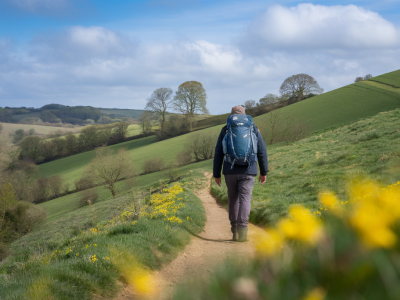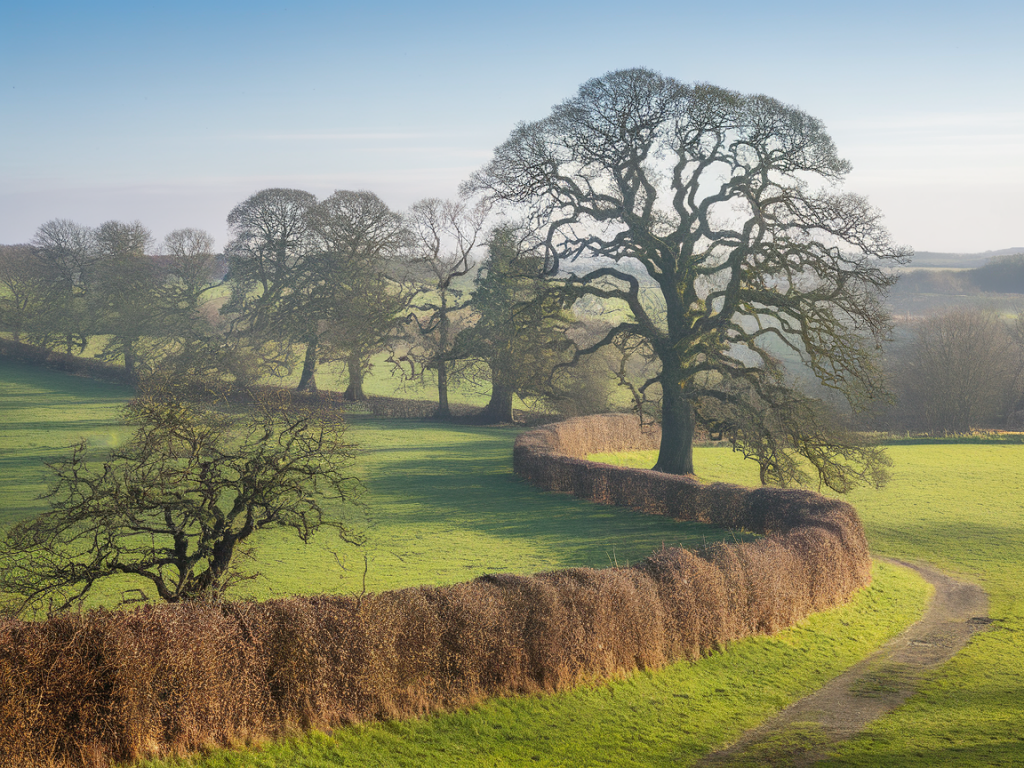
I love walking with my family in Herefordshire — it’s the kind of place where every lane seems to hide an ancient story. On a recent loop we followed a quiet country road, skirted past meadows and orchards, and spent most of the afternoon identifying and recording ancient hedgerow trees. It turned into one of those walks where the kids were engaged, I was taking photos, and we all left with a deeper appreciation for the small, living monuments that line so many of Britain’s lanes.
Why hedgerow trees matter
Hedgerow trees are keystones in rural landscapes. They’re often the oldest living features in a field pattern, providing shade, nesting sites, invertebrate habitat and food sources for birds and mammals. They act as stepping-stones across the countryside for wildlife and are vital for genetic continuity of tree species. From a conservation perspective, recording and protecting these trees helps us track changes in rural biodiversity and inform land management decisions.
Choosing a family-friendly loop in Herefordshire
For a gentle introduction, I recommend a 3–5 mile loop near a village — for example, circuits around Bodenham or the lanes south of Leominster. Pick a route with short, clear stiles, low traffic and plenty of roadside hedgerows. I always plan a route where we can stop regularly: kids need time to examine bark, look for nibbled leaves and scramble over fallen logs. A family loop should include a picnic spot and be adaptable — we often cut the walk short if the little ones get tired, or extend it if they’re still full of energy.
Spotting ancient hedgerow trees: visual clues
Ancient hedgerow trees aren’t always the tallest. What I scan for first are signs of age and continuity:
- Deeply furrowed or fluted bark — older oaks and ash develop characterful bark patterns.
- Hollow trunks — hollows are great for bats, owls and insects; they often indicate long-lived trees.
- Multiple stems from a single root — coppice stools or pollards tell a story of historical management.
- Badly tapered or buttressed bases — buttressing and root flare can suggest advanced age.
- Association with mature hedgerow plants — older hedges often contain a mix of elder, hawthorn, blackthorn, and hazel in complex layering.
I teach the kids a simple rule: if a tree looks like it’s been around when their grandparents were children (or older), it’s worth recording. That’s subjective, yes, but it gets them looking closely.
What I record and why it matters
When I find a promising tree I gather a short, standard set of observations:
- Species (or best guess)
- Approximate trunk diameter at chest height (DBH) — I use a tape measure or a simple paper strip technique
- Visible features: hollow, deadwood, fungal bracket, cavities
- Evidence of wildlife: nests, droppings, insect galleries
- Location: GPS on my phone or a grid reference
- Photographs: wide shot, trunk detail, base and canopy
These observations feed into local and national databases. Small teams and citizen scientists have helped create datasets that influence hedgerow and tree protections — so your notes can make a difference.
Practical gear for a family hedgerow survey
You don’t need specialist kit to get started. Here’s what I usually bring:
- Smartphone with camera and GPS (I use offline maps on Ordnance Survey’s app or OS Maps)
- Measuring tape (2–5m) or a small diameter tape specifically for DBH
- Notebook and pen or a waterproof field notebook for kids
- Binoculars for looking into crowns and spotting nests
- Hand lens or magnifier for kids (great for looking at bark lichens and woodlice)
- Basic first-aid kit, water, and snacks
For photography I favour a lightweight setup: a compact mirrorless like the Fujifilm X-S10 or Sony a6400 with a 35–50mm equivalent lens. It’s portable enough to carry with children and gives good detail shots for ID and records.
How to measure trunk diameter without stressing the tree
Trunk diameter at breast height (DBH) is useful for estimating age and size classes. I measure at 1.3 metres above ground if the trunk is single and straight. If there are low branches or the tree is on a slope, measure at the standard height on the uphill side. For multi-stemmed pollards, measure each stem separately and note that they are pollarded.
A simple family-friendly method: wrap a piece of string around the trunk, mark where it meets, then measure the string with a tape. Divide circumference by 3.14 to get diameter. Kids love the hands-on part — it’s a great way to involve them in data collection.
Recording apps and where to submit your sightings
There are several ways to make your records count. I use a mix depending on the detail I want to submit:
- iRecord
- NBN Atlas
- The Ancient Tree Inventory (ATI)
- Local wildlife trusts or parish conservation groups — they often have volunteer coordinators who welcome records and can advise on local priorities.
When submitting, include photos and clear location details. The ATI, for example, asks for specific information on girth, habitat, management and any notable features. Your photos will help assessors verify the record.
Ethics, safety and getting the kids involved
Respect for nature is primary. I teach my kids to admire without disturbing: don’t break branches for measurements, avoid calling loudly near nesting birds, and always follow the Countryside Code. If a tree is on private land, seek permission from the landowner before entering.
To keep the walk engaging for children, I turn recording into a treasure hunt. We have simple cards: “Find a hollow”, “Spot a bracket fungus”, “Count five different leaves”. Small prizes (a biscuit, a nature sticker) and a sketchbook for quick drawings make the day fun and educational.
Using your records for conservation
Once you’ve collected a few records you can do more than archive them. Share them with local councils or landowners if trees are at risk from road widening, hedge removal or intensive grazing. Conservation organisations can use records to prioritise management like installing protective fencing, creating buffer strips or changing mowing regimes to favour biodiversity.
What I learned on our Herefordshire loop
That afternoon we recorded half a dozen trees that fit the veteran profile — a pollarded oak with a large hollow full of nesting holes, a veteran ash showing bracket fungi and abundant lichen, and a coppiced elm stump supporting a carpet of moss. The kids loved finding beetle tracks and trying to see inside cavities with binoculars. I came away with photos, notes sent to the Ancient Tree Inventory, and a fresh sense that everyday lanes hold conservation value we can all help protect.
| Feature | What it suggests |
|---|---|
| Hollow trunk | Long-term age and important wildlife habitat |
| Pollard or multiple stems | Historical management; often veteran or ancient |
| Bracket fungi | Internal decay providing deadwood habitat |
| Rich lichen cover | Stable bark conditions and low air pollution |
If you want route ideas, photos, or a printable kids’ checklist for your own hedgerow tree walk, check out Outdoorangus Co at https://www.outdoorangus.co.uk. I post detailed trail guides and resources that I’ve used on family outings across the UK — and I’d love to hear about the trees you find on your local lanes.