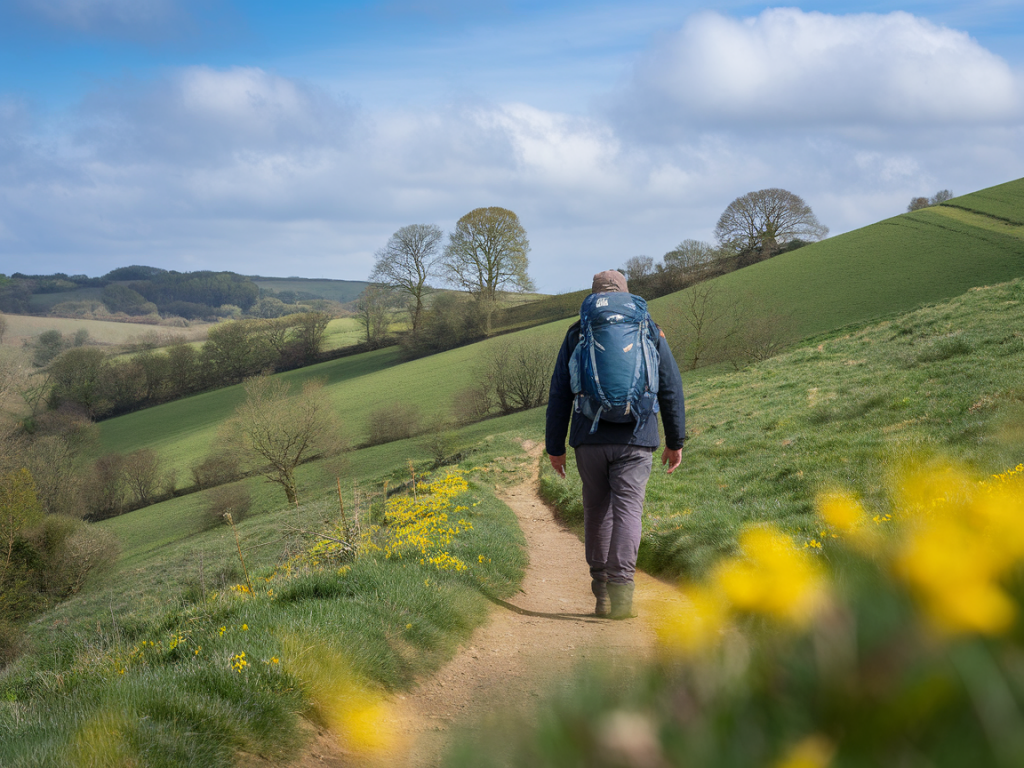
I spend a lot of time walking long stretches of the Cotswold Way and I’ve learned to love planning solo day hikes that rely on lightweight kit and good old-fashioned navigation skills rather than a phone app. Going app-free forces you to slow down, notice the landscape, and trust your map-and-compass routine — and it’s completely achievable with sensible planning. Here’s how I plan a safe, enjoyable solo day on the Cotswold Way while keeping my pack light.
Choose the right section
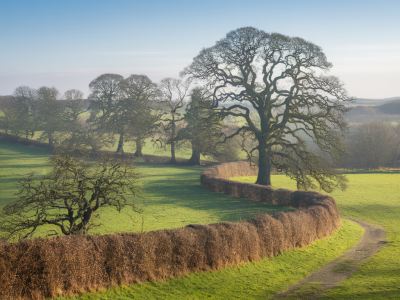
The Cotswold Way is 102 miles of varied terrain: limestone escarpments, sleepy villages, and rolling agricultural land. For a single day hike I pick a section that matches my fitness and the time available. If I want rewarding views with minimal ascent I often choose the stretch between Broadway and Winchcombe or around Stanton and Kingham. For classic escarpment walking with far-reaching horizons I’ll start at Broadway Tower and head towards Snowshill.
When selecting the start and finish points I check three practical things:
Plan without a navigation app
I intentionally leave my phone map apps at home during these hikes. Instead I use a 1:50,000 OS map (Landranger) for broader context and a 1:25,000 (Explorer) for detailed navigation, plus a compass. On the Cotswold Way, waymarks are generally good, but fields change and stile locations move — so I cross-reference the waymark with the map at each junction.
My route planning workflow:
Lightweight kit that covers the essentials
Light doesn’t mean leaving safety behind. I aim for a pack weight (excluding food and water) around 2–3 kg. That means careful choices: multi-use items, ultralight but durable clothing, and small but reliable navigation and safety kit. Here’s a typical list I take on a solo day hike:
| Item | Why I take it |
| Light rucksack (20–25L) | Space for layers, food and camera without excess bulk |
| 1:25k OS Explorer map & compass | Primary navigation — no reliance on mobile signal |
| Water (1–2 litres) | Enough for the day; I treat natural sources only if necessary |
| Insulated jacket & waterproof | Weather on the Cotswolds changes quickly |
| First aid basics & blister kit | Minor injuries are common on solo hikes |
| Headtorch (small) | Emergency light if I’m delayed |
| Whistle & emergency foil bivvy | Lightweight safety items for unexpected stops |
| Food (energy-rich) | Breakfast + lunch + snacks to keep me going |
| Camera (mirrorless) & small tripod | For wildlife and landscape shots — I favour portability |
Brands I trust for lightweight kit include Osprey and Montane for packs and waterproofs, Rab for down jackets, and Peak Design for small camera accessories. For footwear I usually wear a pair of waterproof leather/hybrid boots (e.g. Salomon Quest or Scarpa Zen), balancing comfort and ankle support on varied ground.
Navigation habits on the trail
On the path I use a rhythm that keeps me oriented without stopping every five minutes:
If cloud or low light reduces my visibility I slow down, consult the map more often, and prioritise safe, easy ground. I also make sure someone knows my route and expected finish time — a simple message before I leave and another when I’m done.
Food, water and lightweight fuel
I tend to keep food simple: porridge or a breakfast bar before I start, a solid sandwich for lunch, and high-energy snacks (nuts, dried fruit, chocolate) to top up. For longer or colder days I’ll include a small thermos of hot drink. The Cotswold Way has a decent supply of villages and tearooms if you prefer to top up on the go, but in shoulder seasons I carry enough to be self-sufficient.
Water is heavier to carry but essential. I usually start with 1–1.5 litres and plan to refill from village taps or safe streams. I don’t rely on natural water unless I carry a lightweight filter (e.g. Sawyer Mini) and am confident of the source.
Timing and daylight
Estimating realistic time is vital when you’re solo. My walking pace on rolling Cotswold terrain, including photo stops, is around 3–3.5 km/hr. I allow extra time for steep climbs, lunch breaks, and photography. Before I set off I check sunrise/sunset times and weather forecasts (Met Office or MWIS). If the day is short or forecast muddy, I shorten the route or pick a lower-elevation alternative.
Minimising impact and respecting wildlife
The Cotswolds are a mix of farmland, commons and conservation sites. I follow these simple rules to protect the places I love:
Part of planning is checking for local conservation notices. Sometimes a reserve or stretch of hillside will be temporarily closed — I mark that on my map before leaving home.
Camera approach on a lightweight hike
I balance kit and opportunity. For most day hikes I carry a small mirrorless body (Fujifilm X-T or Sony a7 series) with a 24–70mm equivalent and a 70–200mm equivalent if I expect bird or distant wildlife. A compact tripod (Peak Design Travel or small carbon travel tripod) takes little room and pays off in low light or landscape stacks.
Settings I use often on the Cotswolds:
Emergency and solo-safety checklist
Even with careful planning, things can go wrong. These are non-negotiables for me on solo days:
Finally, I try to keep my plans flexible. The best solo days on the Cotswold Way are the ones where you arrive expecting to see something — a distant buzzard above an escarpment, a field of wildflowers or a hidden churchyard — and have the lightweight, considered kit to enjoy it properly. If you’d like, I can share a printable route card for one of my favourite day sections — just tell me roughly how many miles you want to do.