Why a strict 10-item kit works for exposed headlands
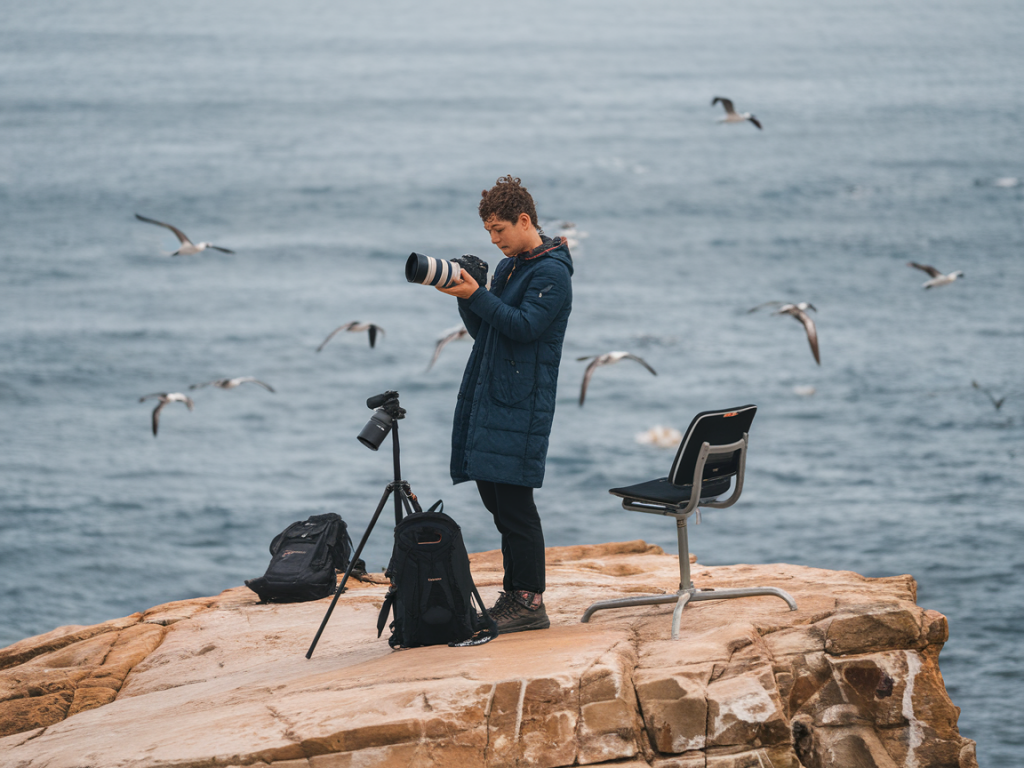
Headland photography is a lesson in restraint. On exposed cliffs you’re dealing with wind, spray, uncertain footing and birds that are often distant and quick. I don’t want a van-load of kit on these walks — I want a compact, reliable 20L rucksack and only the essentials that let me get the shot and stay safe. This list is what I’ve settled on after hundreds of hours on UK headlands: lightweight, multi-purpose items that fit in a 20L pack and perform in the elements.
The exact 10-item kit
- Telephoto lens (300–600mm or 150–600mm zoom)
- Weather-sealed camera body with a reliable autofocus
- Lightweight carbon-fibre monopod
- Small, durable 20L rucksack
- Protective rain cover / dry bag
- Spare batteries and a small fast SD card wallet
- Polarising or neutral-density filter and a microfibre cloth
- Layered clothing + packable windproof
- Simple first-aid and emergency whistle
- Light snack, water & compact map/phone charger
How these items earn their place
I’ve chosen each item because it solves multiple problems on exposed headlands.
Telephoto lens: This is the heart of seabird photography. I usually carry a 150–600mm zoom (Sigma or Tamron) because it covers distant gannets, kittiwakes and fulmars without the weight and cost of a prime. If I need faster glass for low light or high frame rates I’ll swap to a 300mm f/2.8 for calmer conditions. The zoom’s flexibility is invaluable when birds move unpredictably along the cliffs.
Weather-sealed camera body: Salt spray and wind-blown grit are constant hazards. A weather-sealed body with dependable autofocus and decent high-ISO performance lets me shoot into grey light and still expect sharp files. I favour mirrorless bodies for size savings and electronic viewfinder advantages when panning at speed.
Carbon-fibre monopod: A full tripod is often overkill and cumbersome on narrow cliff paths. A lightweight carbon-fibre monopod gives me the stability needed for long glass and high shutter speeds while being quick to reposition. It’s fast to deploy for a sitting or leaning shot and tucks neatly into the pack when not needed.
20L rucksack: The bag is the framework. I use a tidy 20L pack (think Arc’teryx or Osprey’s day packs) with a camera cube inside. It’s large enough for the kit above but small enough to keep my centre of gravity low for scrambling on uneven ground.
Packing, protection and power
Rain cover / dry bag: I keep the lens in a padded cube and the camera in a small dry bag. A fitted rain cover for the rucksack protects everything from sudden showers and sea spray. I’ve learned the hard way that a wet telephoto will seize up if grit gets in — protection is non-negotiable.
Spare batteries & cards: Cold and wind drain batteries faster, and long burst sequences for flight shots eat cards. I bring at least one spare battery per battery I expect to use and a small wallet with two fast UHS-II cards. Keep the spares in an inner pocket near your body to keep them warm.
Filtration, cleaning and image quality
Filters: A polariser is useful early/late in the day to cut glare off wet cliffs and water. A neutral-density (ND) filter has limited use for seabirds unless you want motion blur on waves, but a clear protective filter on the front element can be a sacrificial first line of defence against spray. A quality microfibre cloth and lens blower are essential to clean salt and grit gently.
Clothing, safety and comfort
Layered clothing and windproof: Conditions on headlands change fast. I carry breathable base layers, an insulating mid-layer and a packable windproof shell (e.g. Rab or Montane) that fits in the 20L pack. Gloves that allow finger dexterity for dials and focus are worth their weight.
First-aid and whistle: Even simple scrapes on rocks can become an issue when you’re remote. A small first-aid kit, plasters and an emergency whistle should live in an accessible pocket. Safety trumps the perfect frame every time.
Fueling the day and navigating
Snack, water & map/charger: I pack a dense snack (flapjack or a sandwich), a small water bottle and a lightweight phone battery pack. The phone doubles as map, tide/time check and back-up shutter release, so keeping it charged is crucial. I also carry a paper map or offline map on my GPS app — signal is often poor near cliffs.
Quick field workflow
Here’s how I operate once I’m on the headland:
- Leave the telephoto on the camera for quick reaction shots; keep a lens cloth handy.
- Use continuous AF and high frame rates for flight sequences; switch to single AF for perched birds.
- Lean the monopod into the wind for additional stability; a hand on the lens foot helps control swing.
- Respect bird behavior: if they show signs of disturbance, back away. Ethical photography keeps sites accessible.
Practical packing table
| Item | Purpose | Approx. weight |
|---|---|---|
| Telephoto zoom (150–600mm) | Primary reach for seabirds | 1.6–2.2 kg |
| Weather-sealed camera body | Image capture + AF | 0.6–1.0 kg |
| Carbon monopod | Stability on uneven ground | 0.5 kg |
| 20L rucksack + camera cube | Carry system | 0.8–1.2 kg |
| Rain cover / dry bag | Weather protection | 0.1–0.3 kg |
| Batteries & cards | Power & storage | 0.1–0.2 kg |
| Filter + cloth | Glare control & cleaning | 0.05–0.15 kg |
| Layered clothing | Thermal comfort | 0.5–1.0 kg (varies) |
| First-aid & whistle | Safety | 0.05–0.15 kg |
| Snack, water & charger | Energy & navigation/power | 0.3–0.6 kg |
Final practical tips
Always check tide times and local access rules — many headlands have protected nests during breeding season. Start with conservative shutter speeds (1/2000s for fast flight with long glass) and raise ISO before dropping shutter speed. Keep movements slow and low profile to avoid flushing birds. With a compact 20L setup you’ll be mobile, protected and ready for the unpredictable moments seabirds deliver.