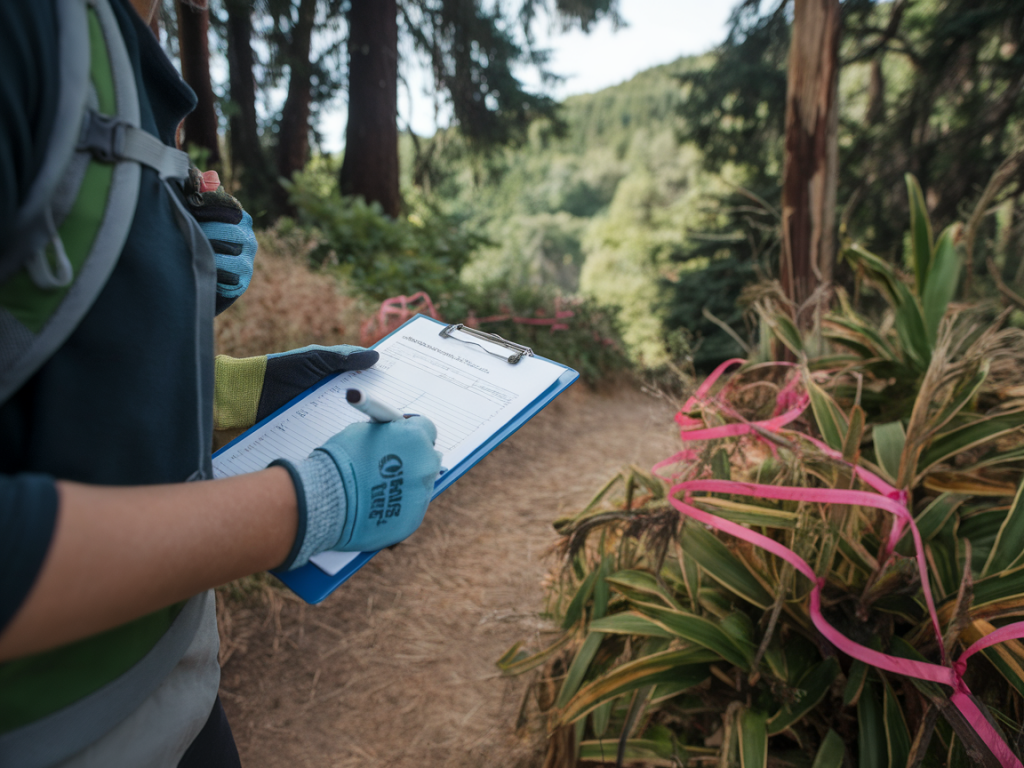
I’m out on the trail a lot, and one of the things that has become part of my routine is looking not only for the next view or bird song, but for the plants that don’t belong. Invasive non-native plants can quietly take over a stretch of hedgerow, choke a pond or destabilise riverbanks — and the earlier we notice and report them, the better the chance local groups have to act. In this post I’ll share how I document and report invasive plants I find while walking: what to look for, how to record useful information, which apps and organisations to contact, and sensible biosecurity and legal notes if you’re tempted to help remove plants yourself.
Why reporting matters
On my walks I’ve seen small patches of Himalayan balsam spread along a stream over a few seasons, and ragwort take hold on a roadside verge. These species can reduce biodiversity, alter habitats and cost councils and landowners money to control. Your observation is often the trigger that gets conservation groups or landowners to investigate. A good, well-documented report can prioritise action, link multiple sightings into a pattern and help build a picture of distribution over time.
Learn the likely suspects
Before you start reporting, it helps to know the common invasive plants you might encounter in the UK. I keep a mental checklist and a small photo reference in my camera roll. Here’s a quick table of species I regularly see on trails, how to recognise them and the main issues they cause.
| Species | Key ID features | Main concern |
|---|---|---|
| Himalayan balsam (Impatiens glandulifera) | Tall pink/pale flowers, explosive seed pods, hollow stems | Outcompetes natives on riverbanks; spreads by water |
| Japanese knotweed (Fallopia japonica) | Bamboo-like stems, zig-zag branches, white flower clusters in summer | Hard to eradicate; structural damage concerns |
| Giant hogweed (Heracleum mantegazzianum) | Very tall umbel flowers, deeply cut leaves, purple-spotted stems | Causes severe skin burns on contact |
| Rhododendron ponticum | Evergreen shrub, large glossy leaves, purple flowers | Shades out native woodland understorey |
| New Zealand pigmyweed / Crassula | Succulent leaves in mats across water margins | Smothers aquatic habitats |
How I document a finding — practical checklist
When I spot a suspect plant I follow a simple routine so the report is useful to whoever receives it.
Best way to photograph for ID
Clear photos are the most valuable single thing you can give. I try to get:
Use a plain background where possible (move slightly so the plant is against earth, water or sky) and steady your phone — a small tripod or leaning on a pack helps. Include an item for scale (my Leatherman, a glove or a twig) when possible.
Apps and recording platforms I use
There are good tools that make reporting easy and link records to national databases:
When reporting, choose platforms that feed into local conservation bodies — the Wildlife Trusts, county records centres or the Non-native Species Secretariat. My go-to is iNaturalist for speed and community verification, then iRecord or a direct email to a local Wildlife Trust if it’s a serious infestation.
Who to contact
Which organisation you contact depends on where the plant is and what it is:
Biosecurity and safe actions
Even with the best intentions, you can make things worse by spreading seeds or fragments. I follow these rules every time:
When removal is appropriate
There are times I’ve joined volunteer teams to pull balsam on riverbanks — but only as part of organised, licensed efforts where disposal and follow-up are managed. If you want to help:
Follow-up and staying involved
After submitting a report I usually bookmark the case number or keep a copy of the email. If the species is a problem, local groups will often publish control plans or volunteer days. I’ll return on later walks to check if the patch has been addressed — repeat records help show whether control is working.
Recording repeatedly over seasons also helps track phenology shifts and spread. If you’re a photographer, you can contribute visual timelines — a photo series of the same patch across months or years is powerful when conservation teams apply for funding.
Reporting invasive plants is a simple way to turn your walks into conservation action. A clear photo, a precise location and a little context can make the difference between a patch being ignored and it becoming a managed issue. If you want, share your sightings on iNaturalist and tag local groups — and always remember to leave no trace while you do it.