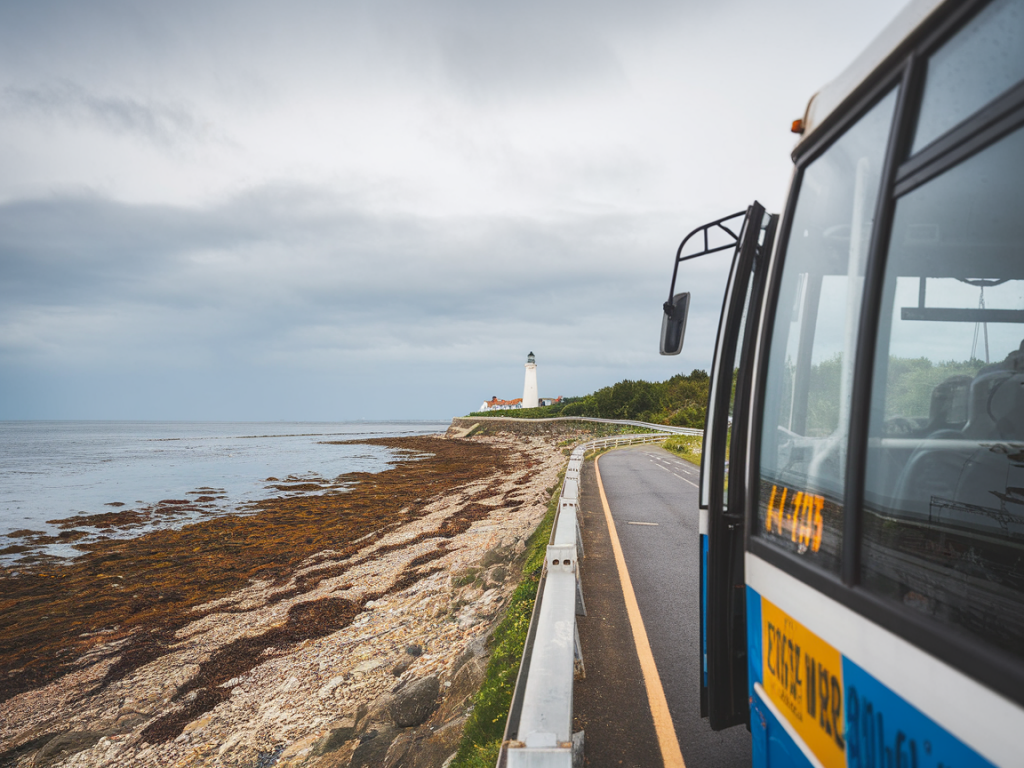
I love the idea of a micro-adventure that starts the moment I step out of my front door and uses only public transport to get me to a stretch of coast I don’t often visit. The Norfolk coast is perfect for this: long, changeable, and remarkably wild in places, with compact towns and a decent public transport network if you plan well. Below I’ll walk you through how I plan a day or overnight micro-adventure along the Norfolk coast using only trains and buses — no car, no taxi. This is the kind of trip you can do with a light pack, a good pair of boots, and a bit of curiosity.
Choose your stretch of coast and a realistic endpoint
My first step is picking a manageable section of coastline. Norfolk has a few distinct flavours — the shingle and cliffs around Hunstanton, the vast sands at Holkham and Wells-next-the-Sea, the craggy headland and seaside towns from Cromer to Sheringham, and the estuaries and marshes around Great Yarmouth and Lowestoft. For a micro-adventure I look for routes that:
For example, a walk from Sheringham to Cromer (or the reverse) is about 9 km along coastal paths and cliffs, and both towns are served by the Bittern Line (Sheringham to Norwich). Wells to Holkham is another great low-tide sand and shingle option, with a bus link via Wells-next-the-Sea.
Research timetables and transport options
Public transport planning is the backbone of this approach. I don’t rely on a single source — I cross-check to avoid surprises:
When possible I aim for train arrival times that give me at least an hour of daylight before the last return bus or train. On summer evenings there’s more flexibility; in winter I plan tightly around sunset and bus times.
Example micro-itinerary
| Start | Walk | Finish | Transport home | Notes |
|---|---|---|---|---|
| Norwich train to Sheringham | Sheringham → Cromer (9 km) | Cromer | Bittern Line train to Norwich | Clifftop views, good pub and bus connections |
| King’s Lynn bus to Wells-next-the-Sea | Wells → Holkham (8 km) | Holkham | Seasonal Coasthopper bus to Wells/King’s Lynn | Watch tides on the sands; RSPB reserves nearby |
Check tides and weather
Tide times are non-negotiable on the Norfolk coast if your route uses beaches or causeways. I use the UK Hydrographic Office tide tables and apps like Tides Planner to check safe crossing times, especially around Holkham and the Wash. For weather I look at the Met Office forecast plus a local wind forecast — a strong onshore wind can make a short walk hard work if you’re exposed on the shingle.
Pack light, but prepare for changeable conditions
Micro-adventures are all about keeping things simple. Here’s my go-to daypack checklist for a Norfolk coastal micro-adventure:
I aim to keep my pack under 8–10 kg for day trips. If I’m staying overnight in a B&B, hostel or camping, I’ll add a minimal sleep system and dry bag for clothes.
Ticketing, discounts and practicalities
Buying the right ticket matters. Railcards (16–25, Two Together, Senior, Family & Friends) can make a day return affordable. For buses, a single-day ticket often covers multiple journeys and is cheaper than separate single fares — operators may run a “coastal rover” ticket in summer.
I also check for engineering works on the National Rail website and look at bus operator social feeds for last-minute diversions. If I’m catching a late train home I always book an advance ticket when available to secure a seat.
Wildlife, access and etiquette
Norfolk’s coast is rich in birds, seals, and coastal plants. If you’re walking near colonies or reserves I always:
Leave No Trace is central to how I travel: pack out rubbish, avoid disturbing dunes and saltmarsh, and don’t feed wildlife.
Photography and composition tips for the coast
I often bring a lightweight mirrorless kit (familiar models: Fujifilm X series or Sony A7 II series) and a zoom covering 24–200mm equivalent. Some quick tips I use:
Safety and contingency planning
I always tell someone where I’m going and when I expect to be back. If my route involves isolated beaches or estuary crossings, I leave an alternate exit point in my notes in case tides or conditions block my planned route. Mobile coverage can be patchy on parts of the Norfolk coast, so offline maps and printed timetables are a good insurance policy.
How I book accommodation when staying overnight
If I turn a micro-adventure into an overnight trip I look for small B&Bs, hostels, or friendly pubs with rooms in towns like Cromer, Wells, or Hunstanton. Booking ahead in high season is sensible, but I sometimes arrive in the afternoon and scout a place in person — that’s part of the micro-adventure spirit, as long as you’re prepared to be flexible.
Micro-adventures on the Norfolk coast are approachable, rewarding and, with a little forward planning, entirely doable using public transport. They force me to slow down, engage with the landscape, and travel in a lower-impact way — plus there’s nothing better than the feeling of stepping off a train and into wind, sea smell and a stretch of path that feels a world away.