Cold-weather day hikes ask a lot of your body and your pack. I’ve learned the hard way that a small, well-chosen stash of food can keep you warm, moving, and in good spirits when temperatures drop and daylight is short. Below I share the meals and snacks I reach for on crisp winter walks—options that are high in energy, easy to prepare, and light to carry. These are practical, often stove-free ideas that I actually use on the trail, plus a few simple recipes and packing tips to keep things safe and tasty.
What I’m aiming for with winter hike food
When I plan food for a cold day hike I prioritize three things:
- Calories per gram — fat-packed foods like nuts and nut butters give more energy for less weight.
- Warmth and comfort — hot food and drinks raise morale and core temperature; a hot drink from a thermos is underrated.
- Convenience — minimal prep, little to no washing up, and low risk of freezing in my pack.
Macronutrient guide — what to pack
For sustained energy I aim for a mix of:
- Fats (40–50% of calories) — dense and slow-burning. Examples: nuts, peanut or almond butter, cheese, chocolate.
- Carbohydrates (30–45%) — quick energy for steep sections: dense breads, dried fruit, energy bars, instant couscous.
- Protein (15–25%) — for recovery and satiety: jerky, hard cheeses, protein powder, tinned fish.
This isn’t a strict formula, but aiming for calorie-dense fats plus some carbs and protein will keep your legs and morale up on cold days.
Stove-free warm options I actually use
Stoves are great, but sometimes I want to travel light or conditions make lighting a stove fiddly. Here are stove-free ways to have something warm:
- Thermos soup — I heat up a thick soup at home (lentil, split-pea, or a ready-made packet) and pour it into a Stanley or Hydro Flask vacuum flask. It stays hot for hours and is a huge morale boost when you stop.
- Hot water in a thermos + instant meal — instant couscous, ramen, or porridge rehydrate quickly with boiling water. I bring spices, olive oil and a scoop of protein powder to up the calories.
- Pre-warmed sandwiches — make a sandwich with nut butter and honey, wrap in cling film and tuck it inside your coat for the first hour. The residual body heat makes it tasty and soft.
Quick, lightweight hot-meal ideas (stove optional)
Here are some combinations I rotate between. All are designed to be prepared quickly or kept warm in a thermos:
- Instant couscous with olive oil & protein — add 120g dry couscous, a tablespoon of olive oil, a scoop of unflavoured protein powder, dried peas or flakes of tuna. Pour boiling water, seal and wait 5–7 minutes. Calorie-dense and warming.
- Lentil/dahl in a thermos — homemade dahl reheats well and is filling. I add a spoon of ghee or coconut oil for extra calories.
- Oats + peanut butter + honey — use quick oats, add boiling water and stir in a tablespoon of peanut butter and honey. High energy and comforting.
- Hypoallergenic energy soup — miso soup with instant noodles and a foil pouch of salmon or chickpeas. Miso keeps flavour without needing much water.
Handheld, high-energy snacks that won’t freeze your hands off
For momentary top-ups on the move, I favour snacks that are easy to eat, won’t get crushed, and deliver a lot of calories:
- Homemade energy bars — oats, nut butter, honey, dried fruit and chocolate chips pressed into a bar. I wrap in greaseproof paper. They travel well and beat many shop bars on calories/weight.
- Nuts & seeds mixes — add candied nuts for calories and dried berries for quick sugars.
- Peanut butter sachets + crackers — individual squeeze packs of peanut butter (e.g., Justin’s) are brilliant; pair with dense crackers or flatbreads.
- Hard cheese & salami — both travel well in cold weather and are calorie-dense; choose vacuum-packed salami or cured meats.
- Chocolate & energy gels — a bar of dark chocolate and a couple of gels for on-the-go bursts when the route gets steep.
One-pot hot recipe for a day-hike (stove recommended)
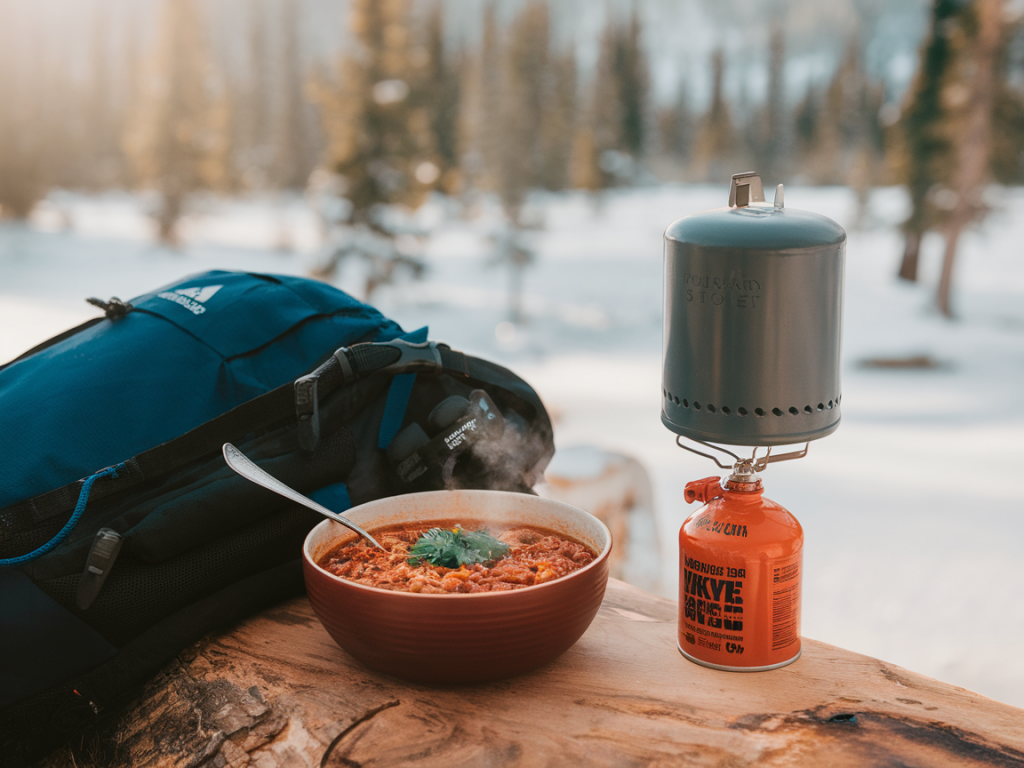
When I do carry a small stove (Jetboil or MSR PocketRocket), this is my go-to winter burner: quick, warming, and heavy on calories.
Hearty couscous stew — in a lightweight pot:
- 50g instant couscous
- 50g dehydrated mixed veg
- 1 tbsp olive oil or butter
- 1 small sachet of chicken or vegetable paste OR 1 stock cube
- 40–60g cooked (vacuum) chicken or a pouch of tuna
Bring about 300ml water to boil, stir in stock and veg, add couscous off the heat and cover for 5 minutes. Stir in oil and protein, eat from the pot. Simple, filling and warm.
Sample day plan (calories & timing)
| Timing | Food | Approx kcal |
|---|---|---|
| Pre-start (cold hands) | Thermos coffee with 1 tbsp sugar & a flapjack | 300 |
| Mid-morning | Handful of nuts + a banana or dried fruit | 350 |
| Lunch | Thermos lentil soup + flatbread with peanut butter | 600 |
| Afternoon top-up | Energy bar + chocolate square | 350 |
| Total (example) | — | ~1600 kcal |
This is a simple, flexible template; increase portions if you’ll be out longer or in very cold weather.
Packing tips to stop food freezing and staying tidy
- Keep a thermos of hot drink near the top of your pack or inside a coat to avoid heat loss. A hot liquid wrapped in clothes can help prevent other foods from freezing.
- Plastic tubs or Ziplock bags are lighter than hard containers and make organisation easier. Use one bag for snacks and another for savoury items to avoid cling film mess.
- Insulated lunch wraps (or even a small dry-bag wrapped in fleece) protect things from freezing overnight or when temperatures plummet.
- Label any home-cooked items with date and contents. In winter, low temperatures slow spoilage, but it’s still sensible to keep fresh items short-lived.
Brands and kit I trust
If you like pre-made options, Mountain House and Alpkit freeze-dried meals are reliable and lightweight. For stoves I use a Jetboil for speed; the MSR PocketRocket is lighter if I’m carrying less fuel. For thermoses, Stanley and Hydro Flask keep things hot for hours and are worth the weight on cold days. For ready snack packs, I often buy bulk nuts and make my own energy bars—cheaper and more calorie-efficient than many commercial bars.
Food safety and environmental considerations
Leaving no trace matters even in winter. Bring rubbish bags for wrappers and sachets—pack them out and don’t burn plastic. If you’re reheating or using perishable proteins, keep them cool in a small insulated section of your pack and consume them within the day. For stoves, use lightweight fuel canisters responsibly and check local restrictions around open fires.
Food is as much about morale as fuel. A hot spoonful of soup when the wind is biting can lift spirits in a way a gel never will. Keep it simple, focus on calorie density and warmth, and experiment until you find the combinations that suit your pace and tastes. Above all: plan energy into your day, and you’ll enjoy the landscape more when you’re not thinking about being hungry or cold.