Reviews

Which midweight walking boots stop hot spots and blisters on long summer ridge walks: field-tested fitting checklist

Which midweight walking boots stop hot spots and blisters on long summer ridge walks: field-tested fitting checklist

I’ve spent hundreds of ridge kilometres in summer light testing boots, chasing views and, importantly, chasing comfort. Hot spots and blisters can ruin a perfect day on a long exposed ridge, so over time I’ve learned to focus as much on fit and small details as on brand hype. Below I share the practical, field-tested fitting checklist I now use before I buy any midweight walking boot, along with what I’ve found works best on long summer ridge walks—where heat, repetitive rubbing and sustained descents expose weaknesses in boots, socks and lacing.

What I mean by “midweight” and why it matters on summer ridges

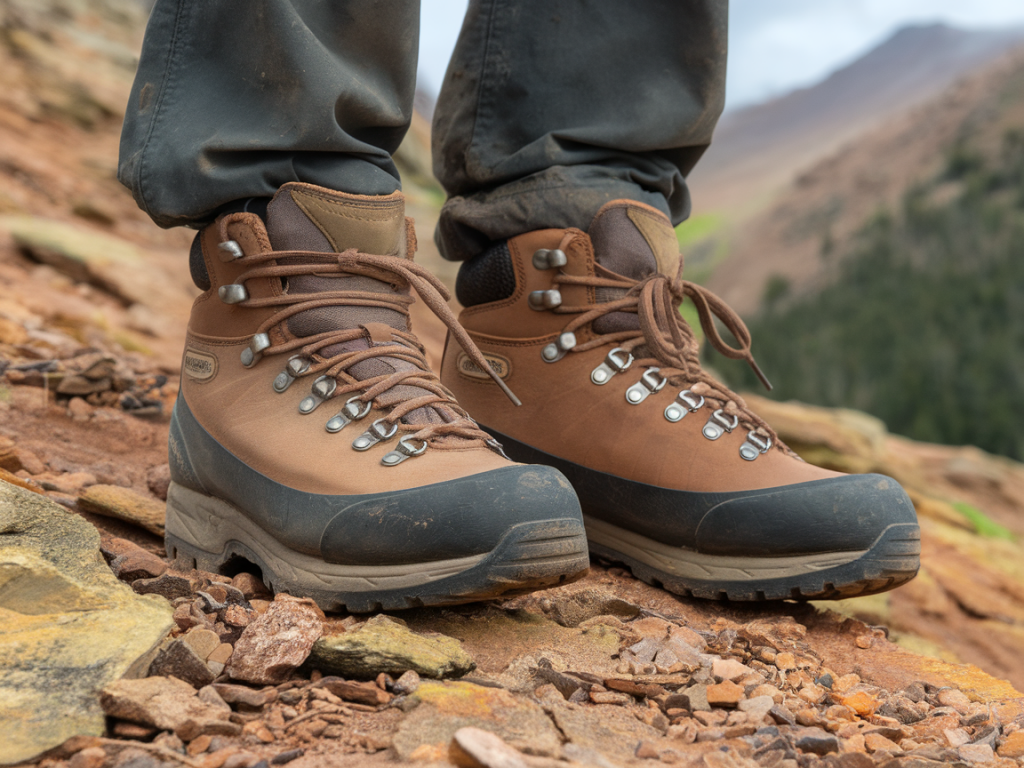
By midweight I mean boots with a moderate amount of structure: enough ankle support and a stiffer sole to manage scree and rocky descents, but not the heavy, alpine-style boots you’d choose for winter. Typical midweight examples I test are models like the Lowa Renegade, Meindl Vakuum, Scarpa Zodiac/Crux, Salomon Quest or X Ultra Mid and La Sportiva Nucleo. These boots sit in a sweet spot for UK ridge walking: they protect and stabilise without being oven-like in summer.

Common causes of hot spots and blisters on ridge walks

  • Incorrect size or volume—too tight across the forefoot or too loose in the heel.
  • Insufficient toe room—your toes repeatedly hitting the front on long descents.
  • Excessive internal seam rubbing—poorly finished inner lining or badly positioned tongue seams.
  • Poor breathability—sweaty feet increase friction and soften skin.
  • Inappropriate sock or insole pairing—thin socks with high friction liners or insoles that change shoe volume unexpectedly.
  • Improper lacing—allowing the foot to slide forward or rotating inside the boot.
  • Field-tested fitting checklist (use this in the shop and on the hill)

    I use this checklist every time I try a new boot. I check footwear with the socks and insoles I actually plan to use — that alone avoids mistakes that cost miles of discomfort.

  • Bring your trail socks and orthotics: Test boots wearing the same socks and insoles you’ll use on ridges. A boot that fits with a thin sock might bite once you add a thicker liner.
  • Measure both feet: Feet are rarely equal. Fit to the larger foot. Stand and sit when measuring — length and volume change with weight-bearing.
  • Allow a thumb’s width of toe room: When standing, there should be roughly 8–12mm (about a thumb’s width) from your longest toe to the front of the boot. This prevents your toes battering the toe cap on long descents.
  • Check heel hold: Put the boot on, lace partially, stand, then walk heel lifts. Your heel should not rise more than ~1cm. More movement increases friction and hotspots on the Achilles.
  • Assess forefoot volume: If the boot feels pinched across the metatarsal heads, try another width or model. Some brands (Meindl, Lowa) offer different widths and internal shaping.
  • Walk varied terrain in the shop: Climb on a step, descend, stroll sideways. Look for any rubbing points—especially around the ankle and tongue.
  • Try different lacing techniques: Heel lock (lace hooks above the ankle), “window lacing” (skipping a row to relieve pressure on bunions), and offset lacing all change how the foot sits. Practice these before committing.
  • Test breathability by warming up: If possible, wear the boots for an hour in-store or around the car park. If your foot gets hot quickly and stays damp, that model may be trouble on long, sunny ridges.
  • Inspect interior seams and tongue padding: I run my fingers along the tongue and ankle liner—any rough seam is a potential hotspot after five hours.
  • Lacing tricks I swear by

    Lacing isn’t decorative—it's the last, simplest system that dictates how your foot sits. I use a three-stage approach on ridge days:

  • Toe zone snug — tight but comfortable across the forefoot so toes don’t slide sideways.
  • Boxing the ankle — skip the next eyelet if you have a sensitive web space, or add a “lace lock” at the top to clamp the heel down gently.
  • Micro-adjust on the move — after 20–30 minutes I often loosen one eyelet if the top of my foot starts to go numb; then re-lock after descending.
  • Breathability vs waterproofing: the summer compromise

    On warm, exposed ridges breathability matters. Full Gore-Tex waterproofing can trap heat; many experienced walkers opt for hydrophobic nubuck or GORE-TEX Surround / eVent panels that balance water resistance with increased airflow. I’ve had best results with boots that are water-resistant rather than fully sealed when I know I’ll be in dry summer conditions. If you need waterproofing for uncertain weather, choose a breathable membrane but accept a small trade-off in internal temperature.

    Insoles, socks and additional layers

    Often the difference between mile 5 and mile 25 comfort comes from what’s inside the boot, not the boot itself.

  • Merino or synthetic hiking socks — avoid cotton. I use a thin liner sock under a thicker merino sock on multi-day or very hot walks; the liner reduces friction and helps manage sweat.
  • Performance insoles — not all are equal. Firm, low-profile insoles that match your arch type provide stability without altering toe room. If you add a thick orthotic, re-check toe space.
  • Tape and blister prevention — I carry a small blister kit: friction tape (e.g., Leukotape), Compeed plasters and moleskin. For known weak spots I pre-tape before the walk.
  • Boots I often recommend after ridge testing

    These are models I’ve personally worn on long summer ridge walks and found to reduce hotspots when fitted properly:

    Lowa Renegade Mid GTXExcellent heel hold and volume options; supportive but breathable for a GTX boot.
    Meindl Vakuum GTXThermo-formable liners give a custom fit that reduces friction points—great for long descents.
    Scarpa Zodiac/CruxLightweight midsole with good torsional support; roomy toe box and low overall weight.
    La Sportiva Nucleo or TX4Breathable and nimble; the Nucleo's Gore-Tex® Surround option is a good compromise on summer ridges.
    Salomon X Ultra MidModern last with precise heel fit and great lacing system—less slippage on technical descents.

    On the hill: what I do if a hotspot appears

  • Stop early—don’t wait. Treating a tiny hotspot immediately prevents larger blisters.
  • Dry the area if possible and apply friction tape or a plaster. If you’re carrying duct tape it can double as protection.
  • Adjust lacing—loosen the offending zone, try a different pattern, or add a tongue pad to change pressure points.
  • Replace socks if damp; swap to a fresh, dry pair mid-walk if you have them.
  • Buying the right midweight boot for summer ridge walking is largely about fit, small choices and realistic expectations around waterproofing and breathability. Use the checklist above in the shop and on the hill, test lacing techniques and pair the boots with the socks and insoles you plan to wear. Those steps have saved me more than one blistered walk and helped me enjoy long ridges in proper comfort.
    You should also check the following news:

    How to rig a lightweight, waterproof camera shelter from a tarpaulin for dawn cliff-top seascapes

    How to rig a lightweight, waterproof camera shelter from a tarpaulin for dawn cliff-top seascapes

    On cold, wind-blasted mornings when I’m chasing the soft light over the sea, the last thing I...

    May 05
    Step-by-step guide to running a hedgerow tree age survey and submitting records to your local trust

    Step-by-step guide to running a hedgerow tree age survey and submitting records to your local trust

    When I want to understand the history hidden in a hedgerow, I run a simple age survey that combines...

    Apr 29