Running a village nature watch is one of the most rewarding things I’ve done to connect people with the landscape on their doorstep. It doesn’t need to be complicated or expensive — just a clear plan, a handful of motivated volunteers, and a simple, repeatable survey method that feeds records back to your local wildlife trust. Below I share what’s worked for me: how I recruit and support volunteers, practical survey approaches that suit busy community groups, and the best ways to submit and use the data you collect.
Finding and recruiting volunteers
My first piece of advice: think small and local. The most reliable volunteers tend to be people who live nearby, walk in the area regularly, or have a specific interest (birds, wildflowers, moths). I recruit through a mix of channels:
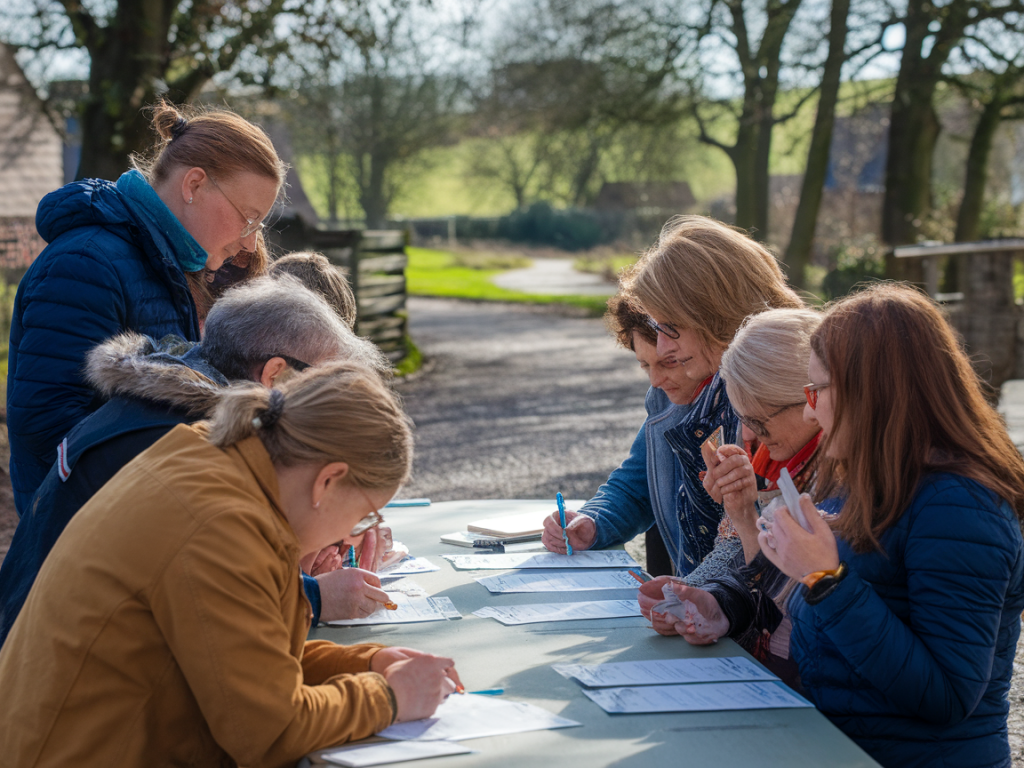
When I meet prospective volunteers, I focus on three reassurances: it’s flexible, it’s social, and it’s low-pressure. I tell people they don’t need fancy kit — a smartphone, a notebook, and sensible shoes do the job. I also offer a simple initial training walk so volunteers know what I expect and feel confident with the route and recording method.
Volunteer roles that keep a project running
Simple role definitions make recruitment and coordination easier. I usually split tasks like this:
Assigning small, clear responsibilities prevents burnout and gives people ownership. I also run a rota so the same few people aren’t doing everything.
Simple survey methods that work for community groups
Complex protocols are great for research, but for a village nature watch I favour methods that are:
Here are three approaches I use, with pros and cons:
Timed walk (the method I recommend most)
Choose a fixed route (1–3 km) and a fixed duration (30–60 minutes). Volunteers walk the route at a natural pace and record everything they see/hear.
Point counts for birds and bats
Pick a few static points on the route and spend 5–10 minutes at each counting birds seen or heard. For bats, use fixed 5–10 minute listening sessions at dusk with a bat detector (e.g., Echo Meter Touch or Anabat when available).
Opportunistic recording
Encourage volunteers to make casual records outside scheduled walks via apps like iNaturalist or iRecord. This fills gaps and captures unusual sightings.
What to record (minimum fields)
To make your data useful to local trusts, keep a standard minimum dataset that’s quick to collect. I ask volunteers to record:
Below is a simple table template volunteers can use on paper or replicate in a spreadsheet:
| Date | Time | Recorder | Location (grid/ref) | Species | Count | Notes (behaviour, habitat) |
|---|---|---|---|---|---|---|
| 2026-03-14 | 09:30 | Jane Smith | NZ123456 / Village pond (E side) | Mute Swan | 3 | Feeding; juveniles present |
Tools and apps I use
Simple digital tools make data collection and submission much easier. My go-to list:
Submitting records to your local wildlife trust
Your local wildlife trust will almost always welcome records — they use them to inform conservation planning and habitat management. Here’s the process I follow:
Most trusts also appreciate a short summary after a season: how many species recorded, any notable finds, and any threats you observed. This keeps the relationship active and shows the value of volunteer effort.
Training, safety and ethics
Offer short training sessions on species ID, use of apps, map reading and basic health & safety. I run an annual “ID session” in the village hall using a projector and lots of photos — it’s a great social event and gives volunteers confidence.
Running a village nature watch is as much about building community as about the data. Celebrate small wins — the first record of a scarce plant, a wintering bird returning, or simply a growing group of friendly walkers. With clear roles, simple methods and a reliable pathway to your local wildlife trust, your records will really matter to conservation on the ground.