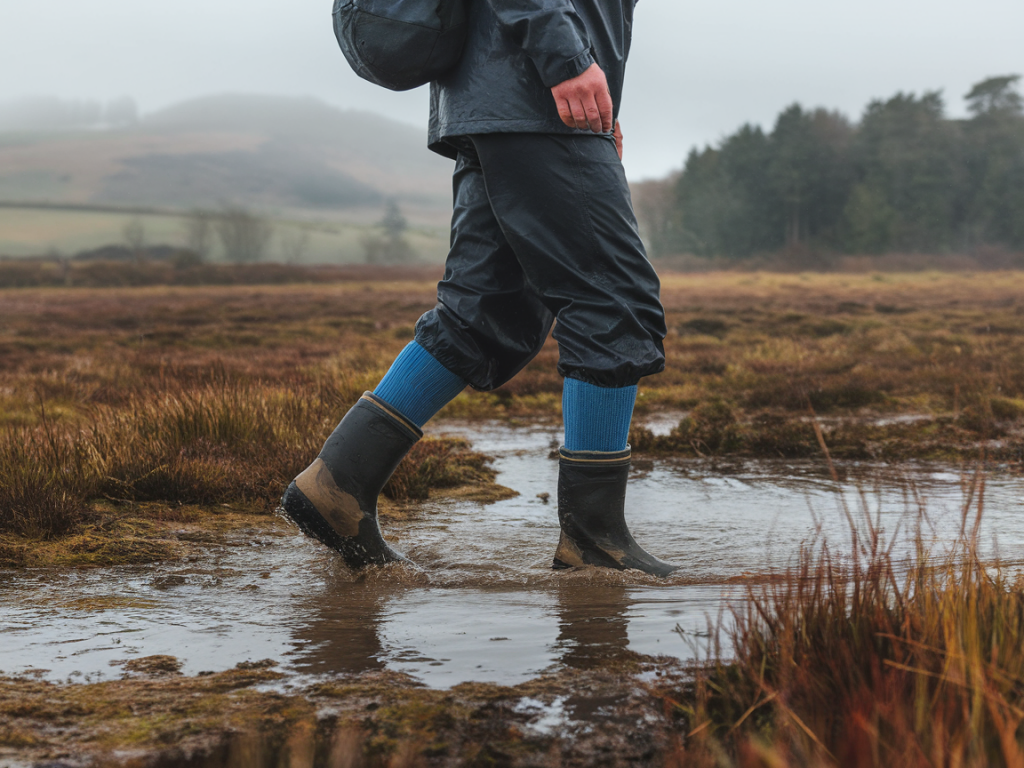
Winter on Dartmoor teaches you quickly that a wet foot is the enemy of a good day out. After years of slogging through peat hags, heather, and the infamous blanket bogs, I’ve settled on a handful of gaiter-and-sock combinations that reliably keep my feet dry, blister-free and moving. Below I share what I’ve tested in real conditions, why certain materials and fits matter, and practical tips for fit, care and on-trail fixes.
Why gaiters matter more than you think
Gaiters are often an afterthought, but on Dartmoor in winter they’re frontline kit. They stop peat-water, grit and heather from entering your boots and socks, protect the lower part of your trousers from saturation, and reduce abrasion on the collar of your boots — which helps prevent hotspots in the gaiter/boot interface.
There are three crucial things I look for in gaiters for Dartmoor bogs:
- Water resistance: A waterproof membrane or treated fabric that can shrug off bog water without instantly soaking through.
- Coverage and seal: Sufficient height (mid-calf to just below the knee depending on route) and a secure lower attachment so water doesn’t surge in under the gaiter.
- Durability & weight: Reinforced lower panels for rock/peat abrasion and a weight that doesn’t make turning ankles feel worse.
My go-to gaiters for heavy Dartmoor winter use are a robust pair of mid-weight, waterproof gaiters (I’ve used Rab Latok gaiters and the Montane Featherlite gaiters in different seasons). Rab’s have a durable Cordura lower with a breathable membrane — heavier, but they take the abuse. Montane are lighter and pack down, good for mixed days.
What matters in socks — not just material
Socks do the work of blister prevention more than anything else. I’ve learned the hard way that expensive shoes and good gaiters won’t save you if the sock is wrong. Here are the elements I prioritise:
- Fit & thickness: A sock should fit snugly without bunching. Thickness depends on boot fit — for tight-fitting boots I use thinner technical merino blends; for roomier boots a thicker cushioned sock is better.
- Material mix: Merino blended with synthetic fibres (nylon/PP) gives insulation, moisture wicking and durability. Pure cotton is a non-starter — it holds water and increases blister risk.
- Seam construction: Flat toe seams and reinforcement in high-wear areas are vital.
- Double-layer systems: Two-layer socks or a liner + outer sock combo reduce shear (the main cause of blisters).
My staple socks for Dartmoor are merino-blend hikers from brands like Bridgedale (StormSock) and Darn Tough for colder days. For wet winter bogs I often pair a thin polypropylene liner sock (eg. SealSkinz liners or cheap wicking liners) with a merino outer. That combination dramatically reduces friction and dries faster than a single thick sock once conditions improve.
Field-tested combinations that work
Below are combinations I’ve worn on long winter crossings of the moor. I list them from most protective/dry to fastest-drying/most breathable.
- Heavy protection (deep bogs, long wet exposure)
- Gaiters: Mid-weight waterproof Cordura gaiters (e.g. Rab Latok).
- Socks: Thin polypropylene liner + heavy cushioned merino outer (Bridgedale StormSock) inside a sturdy leather or lined synthetic boot (e.g. Meindl or Scarpa).
Why it works: The liner moves with your foot, the outer provides insulation and cushioning; gaiters keep boot upper dry so socks stay warmer. - All-round winter day (mixture of wet and dry)
- Gaiters: Lightweight waterproof gaiters (Montane Featherlite or Rab Kinetic).
- Socks: Midweight merino-blend sock (Darn Tough or Bridgedale) with no liner.
Why it works: Good balance of breathability and protection. Lighter gaiters reduce weight while still blocking most spray and short bog crossings. - Fast and variable (long miles, priorities speed)
- Gaiters: Ultralight, water-resistant gaiters (shorter, around mid-calf).
- Socks: Thin merino or synthetic socks, often paired with a thin liner for blister protection.
Why it works: Moves quickly and prevents overheating; best when you can avoid long time sitting in standing water.
Fit and sealing tips — small adjustments that matter
- Boot-gaiter interface: Ensure the gaiter strap and hooks sit securely under the boot and the drawcord around your calf is snug. If there’s slack, water will be pumped in.
- Sock-toe clearance: Your toes should not touch the front of the boot when descending. Even a small constant rub creates hotspots. If in doubt, use a slightly thicker sock or size your boot accordingly.
- Layering socks: When using liners, make them smooth and correctly sized — too-large liner equals bunching, too small can constrict circulation.
- Try them together: Buy socks and gaiters with the exact boots you intend to wear and walk a loop locally. Retail testers don’t replace a proper moorland test.
Care, drying and emergency fixes
On long days and multi-day winter treks you’ll almost certainly get damp. How you deal with it makes the difference between a miserable day and one you remember for the right reasons.
- Mid-day drying: If socks get wet but boots stay relatively dry, change into a dry pair at lunch. Keep a small sandwich bag for wet socks so they don’t soak the rest of your pack. I keep an ultralight dry bag with a spare pair.
- Drying on the move: If you must continue, wring and stomp to remove excess water, then put socks back in and let circulation help. It’s not ideal but it’s often necessary.
- Emergency fixes: Use duct tape over hot spots before they blister. If a sock has a developing seam rub, flip or adjust it; a different sock orientation can save the day.
- Cleaning gaiters: Remove grit from straps and hooks; reproof with a Durable Water Repellent (DWR) spray when you notice wetting out.
Quick comparison table of combos
| Combo | Protection | Weight | Drying speed | Blister risk |
|---|---|---|---|---|
| Waterproof Cordura gaiter + liner + heavy merino | Very high | High | Medium | Low |
| Light waterproof gaiter + midweight merino | High | Medium | Medium-High | Low-Medium |
| Ultralight gaiter + thin merino + liner | Medium | Low | High | Medium (if liners used correctly) |
Final practical notes from the moor
What’s worked for me across many Dartmoor winters is a pragmatic approach: prioritise a reliable gaiter that seals well at the boot edge, use liners when you expect prolonged wet feet, and test sock-boot combinations on shorter local walks before committing to a long crossing. For brands, I value durability from Rab and Bridgedale’s proven linings, but lighter Montane or Sea to Summit options have their place when weight matters.
If you’re planning a particular route on Dartmoor and want specific kit tweaks for that terrain (e.g. peat hags on the northern tors versus coastal marshes), tell me the route and boot type and I’ll suggest a tailored combo based on what I’d pack for that kind of day.